Is Radon Testing Worth It in Burnsville?
Quick answer: Yes. Burnsville sits in Dakota County, an EPA Radon Zone 1 area where homes frequently test above the 4.0 pCi/L action level. Radon is invisible, odorless, and the second-leading cause of lung cancer per the EPA and CDC. A 48-hour test during your inspection costs a fraction of a mitigation system and gives you the data to negotiate one. For Burnsville buyers, radon testing is one of the highest-value add-ons available.
Why Burnsville specifically
Radon isn't uniform across the country — it tracks the local geology. Minnesota has some of the highest indoor radon levels in the nation, and Dakota County's glacial deposits and uranium-bearing soils put it squarely in the EPA's highest-risk Zone 1. The Minnesota Department of Health reports that roughly 2 in 5 Minnesota homes test above the action level. In a county like Dakota, a basement home is a textbook candidate for elevated readings.
| Reading (pCi/L) | What it means | Recommended action |
|---|---|---|
| Below 2.0 | Low — near outdoor average | No action; consider retest in a few years |
| 2.0 – 3.9 | Elevated but below action level | Consider mitigation; EPA notes risk still exists |
| 4.0 – 7.9 | Above EPA action level | Mitigation recommended (sub-slab depressurization) |
| 8.0+ | Well above action level | Mitigate promptly |
How the test works
We place a continuous radon monitor in the lowest livable level and let it run for 48 hours under closed-house conditions. The device logs hourly readings, which catches manipulation and gives a defensible average rather than a single snapshot. The result drops into your report, and if it exceeds 4.0 pCi/L you have documented grounds to ask the seller to fund a mitigation system before closing.
Mitigation is straightforward
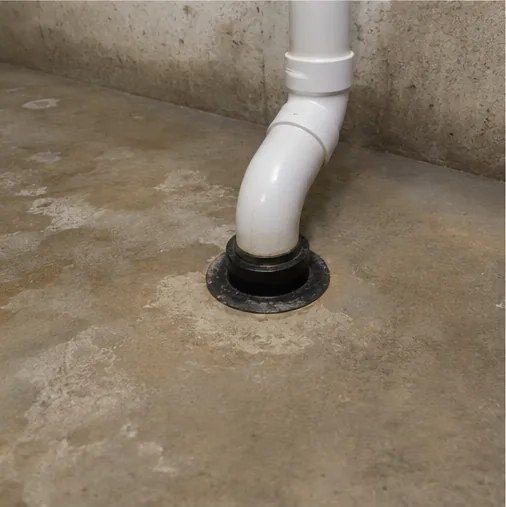
An elevated result is not a dealbreaker. The standard fix — active sub-slab depressurization — runs a vent pipe and fan that draws radon from beneath the slab and exhausts it above the roofline. It's a well-understood, permanent solution, and on a purchase it is routinely negotiated as a seller-funded repair.
A real Burnsville example
A buyer on a 1985 two-story near Sunset Pond added a radon test almost as an afterthought. The 48-hour monitor returned 5.1 pCi/L — comfortably above the action level. Because the result was documented in the inspection report, the buyer's agent requested a seller-installed mitigation system as a condition of closing. The seller agreed, the system was installed and verified below 2.0 pCi/L, and the buyer moved in with clean air and zero out-of-pocket cost.