Savage Home Inspections
Why Savage Buyers Hire SPEC
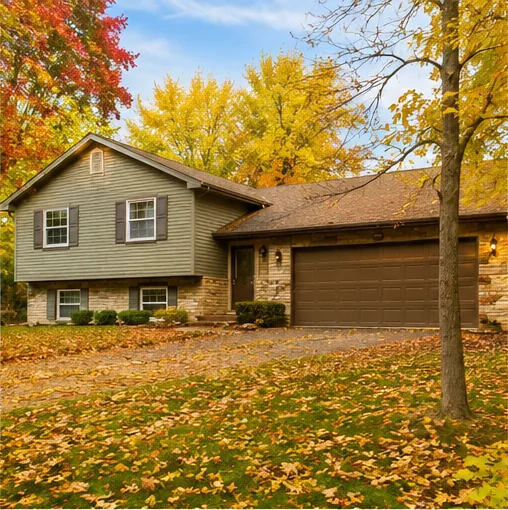
Savage is Burnsville's western neighbor across the Credit River, in Scott County. SPEC inspects throughout Savage including the Hidden Valley and Eagle Creek areas, the bluff-edge homes overlooking the Minnesota River, and the rapid new-construction expansion along County Rd 42 west of Hwy 13. Savage's defining inspection consideration is the Minnesota River bluff geology — homes near the river edge in the Boiling Springs and Hidden Valley areas show bluff-related foundation movement, and stormwater management on steep lots is a recurring finding. Savage's housing stock skews newer than Burnsville (more 1990s and 2000s subdivisions), which means new-construction-era issues dominate: original 25-year shingles past replacement window, Polybutylene plumbing in the late-80s pockets, and OSB-sheathing rot at deck ledger flashings. Scott County radon levels are similarly elevated to Dakota County. Savage is served by ISD 191 (shared with Burnsville and Eagan). Pre-listing inspections move fast in Savage's competitive market — a $500 spend usually saves $5K-$15K in concession demands.
Housing Stock & Era Profile
Every south-metro suburb has its own buildout pattern, and the inspection findings track those patterns. The original housing eras dictate the electrical era (knob-and-tube, aluminum branch, modern copper), the plumbing era (galvanized, cast-iron drain, Polybutylene supply, modern PEX), the heating era (gravity boiler, mid-efficiency furnace, high-efficiency furnace, high-efficiency furnace at end-of-life), and the envelope era (uninsulated, R-19 settled, R-49 modern). When we arrive on-site we already know the era profile and the era-specific findings most likely on the table.
Newer construction follows newer-construction defect patterns: improperly flashed deck ledgers, HVAC commissioning issues, garage-slab settlement on filled subgrade, EIFS or LP/SmartSide siding issues, and builder-warranty-eligible drywall and trim findings. The 11-month warranty inspection is the highest-ROI second inspection for any new build under 12 months old.
Common Defects We Find Here
Defect frequency tracks housing era and soil profile more than it tracks city boundary. The 1965-1976 aluminum branch wiring window cuts across Burnsville, Apple Valley, East Bloomington, the Cedar Grove neighborhood of Eagan, and pockets of Edina. The 1986-1995 Polybutylene window concentrates in Sunset Pond Burnsville, much of Eagan, late-80s Lakeville and Savage, and similar-era subdivisions across all the south-metro suburbs. Federal Pacific and Zinsco panels appear wherever 1970s housing wasn't electrically updated.
Climate-driven defects are universal across the south metro: ice damming on under-insulated north-facing eaves, freeze-thaw deterioration on basement walls and exterior concrete, frost-heave on shallow garage slabs, and humidity-driven attic mold from bath fans terminating in soffits or attics. Soil-driven defects vary by neighborhood within each city — clay-heavy pockets show hydrostatic pressure findings, sand pockets show settlement findings.
Soil & Foundation Profile
Soil under the south metro varies block by block. Glacial till — high-clay, holds water, heaves with frost — dominates the central belt running through Burnsville, Apple Valley, Eagan, and Rosemount. Outwash sands — well-draining, settles differentially over decades — concentrate in Buck Hill, parts of Lakeville, and the Vermillion River corridor. Bluff-edge limestone — Minnesota River bluff and Mississippi River bluff — runs through River Hills, Mendota Heights, West Saint Paul, and parts of Inver Grove Heights. Each soil profile produces a distinct foundation finding pattern, and we document with thermal imaging and laser-level when the foundation evidence calls for it.
Climate Considerations
The Twin Cities frost depth is 42 to 60 inches. Footings must bear below 42 inches at minimum; older homes occasionally have shallower footings showing frost-heave damage. Snowfall averages 50+ inches per year, with persistent ice damming on north-facing eaves and over uninsulated garage-to-living-space transitions. Summer humidity reaches the high 90s for stretches, growing mold in unsealed crawl spaces and producing condensation on cold air ducts in unconditioned attics. We inspect for all five seasonal stressors on every south-metro home regardless of city.
Sewer & Plumbing Era
Pre-1985 lateral sewer lines across the south metro are typically clay or cast-iron, now 40 to 60 years old, running through soil populated by mature silver-maple and oak roots. Bellies, root intrusion, and partial collapses are routine. Sewer scope is non-negotiable on any pre-1985 home. Post-1985 PVC laterals are dramatically more durable but not immune — settlement and offset joints still appear. We push a calibrated camera from cleanout to city main, you watch the monitor, and you receive the video file with your report.
Radon Reality in This Sub-Region
Dakota and Hennepin and Scott counties all sit in the EPA's elevated-radon zone. Burnsville and surrounding city basement test results routinely come back at or above the 4.0 pCi/L action level, with averages in the 4-6 pCi/L range and a meaningful tail of homes testing above 8 pCi/L. The geological basis is uranium-bearing soil in the surface and subsurface strata, with limestone-bedrock proximity in the bluff-edge cities adding additional radon load on top of the regional baseline. Mitigation via sub-slab depressurization is straightforward and effective when warranted. Radon testing — a 48-hour continuous monitor with court-defensible chain-of-custody — is recommended on every south-metro home inspection regardless of city.
Higher levels concentrate in 1970s/80s homes with sump crocks, dirt-floor crawl sections, or block foundations — exactly the housing inventory that dominates the older neighborhoods of every city in the south metro. Newer construction with sealed slab and full-perimeter exterior drain tile typically tests lower but not zero; testing is still recommended.
The Inspection Day in This City
SPEC inspections take 3 to 4 hours on-site for a typical home, longer for older split-levels with sewer scope and radon add-ons or for larger two-story properties with finished basements and detached structures. We arrive having already pulled relevant city permit history, year-built data, and known code complaints. The inspection sequence: roof first (walked when safe, drone-flown when not), exterior envelope, attic and insulation, interior systems, mechanical systems, basement and foundation, specialty add-ons, and finally an on-site walk-through with you for the last 30 to 45 minutes. The deliverable is a 40-80 page annotated PDF delivered to your inbox within four hours of inspection completion — report in 24 hoursing is standard at SPEC, not an upgrade.
FLIR thermal imaging is included on every inspection at no upcharge. Sewer scope is a scheduled add-on and is non-negotiable on pre-1985 homes. Radon testing is a scheduled add-on and is recommended on every Dakota County and adjacent-county home. Mold sampling, well water testing, septic inspection, and pool/spa inspection are scheduled add-ons available where applicable.
Negotiation & Closing-Window Reality
Most Minnesota purchase agreements grant buyers a 5-to-10-day inspection contingency window. Inside that window, the buyer can negotiate based on inspection findings, request seller concessions, request repairs, or terminate the agreement and recover earnest money. The practical implication for buyers in this market: schedule the inspection within 24-48 hours of offer acceptance, get the report in 24 hours that evening, and have your negotiation conversation with the seller's agent within the first 5 days of the contingency window. SPEC's 24-hour-report cadence is built around this timeline.
Most SPEC inspection reports get used to negotiate $5,000 to $15,000 in concessions or repair credits. The inspection itself is a small fraction of that figure; the ROI on a inspection in a south-metro real estate transaction is among the highest on any line item.
For Sellers in This City
Pre-listing inspection is the highest-ROI single decision a south-metro seller can make. The math is straightforward: an inspection identifies findings the buyer's inspector would otherwise surface 30 days later at the closing table, when the seller's negotiating position is dramatically weaker. By identifying findings 4-6 weeks before listing, the seller controls the repair scope, the contractor selection, the timeline, and the disclosure. By disclosing findings up front in the listing materials, the seller filters out buyers who would otherwise drop out after inspection — saving time, marketing dollars, and emotional churn. Most south-metro sellers using a pre-listing inspection save $5,000 to $15,000 in concession demands and shorten time-on-market by 7 to 21 days.