Burnsville Home Inspection
The 100-word answer: A Burnsville home inspection is the move that protects your purchase the moment your offer is accepted. SPEC Home Services performs a 120-point evaluation of the home you're buying, then delivers a photo-documented report in 24 hours — fast enough to use inside your purchase-agreement contingency window. That report tells you what you're really buying, hands you leverage to renegotiate price or repairs, and lets you walk away with your earnest money if the home has a deal-breaker. Booking is simple: request your inspection or call 218-600-2938.
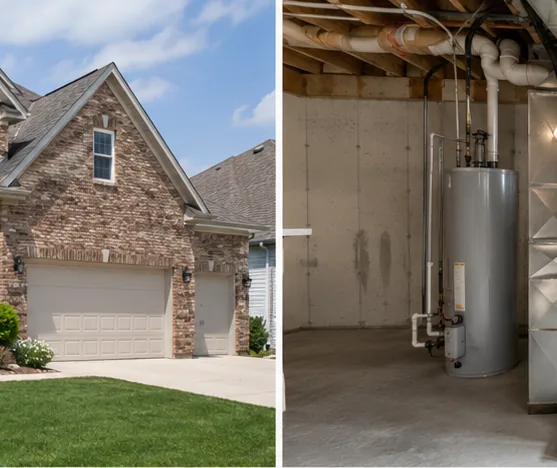
What You're Actually Buying — and Why an Inspection Settles It
By the time your offer is accepted on a Burnsville home, you've seen the property for maybe an hour total, mostly while emotionally invested in winning it. The inspection is the first time anyone walks that house with no stake in the sale and a single job: tell you what's true. That shift — from "this is the one" to "here's what it is" — is the entire value of a home inspection, and it's why this page exists separately from the technical breakdown of what we check.
This is the buyer-and-seller landing page. If you want the full system-by-system list of every component we evaluate, the equipment we carry, and the hour-by-hour flow of inspection day, that lives on our 120-point home inspection service page. Here, the focus is your transaction: what the inspection does for the deal you're in right now, when to schedule it, how the report becomes negotiating leverage, and how to keep the whole thing inside the contingency window your purchase agreement gives you.
Burnsville is a city of older bones. Incorporated in 1964, it grew up in three waves — the 1965-to-1979 split-levels around Crystal Lake and original Buck Hill, the 1980-to-1995 two-story colonials along Sunset Pond and the County Road 42 corridor, and the post-2010 townhome and infill construction in Heart of the City. Most homes changing hands here are thirty to fifty-five years old. That age is exactly why a generic walkthrough isn't enough: the defects that matter most in Burnsville are hidden inside panels, behind drywall, in the attic, and under the slab, and they're specific to when and where the house was built.
The Buyer Journey: Offer → Inspection → Report → Negotiation
A home inspection isn't a standalone errand. It's one move inside a tightly-timed sequence, and the buyers who get the most out of it are the ones who understand where it sits in the flow. Here's how the journey runs on a typical Burnsville purchase.
- Offer accepted. Your purchase agreement is signed by both sides and your earnest money is on the line. The inspection contingency clock starts now — not when it's convenient, now.
- Inspection booked. You call SPEC the same day. We schedule most Burnsville inspections within 24 to 48 hours, which keeps the maximum number of contingency days available for the part that matters: negotiating.
- Inspection performed. We spend three to four hours on the property — longer on older split-levels with sewer scope and radon add-ons. You're welcome to join for the final walk-through, where the biggest findings get explained in plain language.
- Report in 24 hours. Within hours of finishing — often before you've pulled out of the driveway — you receive an annotated digital report with color-coded priorities, photos of every finding, and a one-page summary your agent can hand straight to the listing side.
- Negotiation. You and your agent decide: accept the home as-is, ask the seller to repair specific items, ask for a price reduction or closing credit, or — if something serious turns up — terminate and recover your earnest money. The report is the evidence behind every one of those conversations.
The thread running through all five steps is time. Each day you wait to book is a day removed from the negotiation phase, and negotiation is where the inspection pays for itself many times over. That's the whole argument for scheduling early, which we'll come back to below.
The Contingency Window Is the Whole Game
Most Minnesota purchase agreements grant the buyer an inspection contingency — typically a 5-to-10-day window after acceptance during which you can have the home professionally inspected and act on what's found. Inside that window you hold real power: you can negotiate repairs, request a price reduction or seller-paid credit, or terminate the agreement and get your earnest money back. Once the window closes, that power is gone. You're committed to the home as it sits.
This single fact reframes everything about scheduling. A buyer who books the inspection on day one of a seven-day window has six days to receive the report, review it with their agent, get repair estimates if needed, and conduct an unhurried negotiation. A buyer who waits until day four has the same report-in-24-hours turnaround but only two or three days left to negotiate before the contingency lapses — and sellers know it. Compressed timelines weaken your position. Early timelines strengthen it.
This is also why SPEC's report-in-24-hours commitment isn't a marketing flourish — it's structural. A slow report eats the very days you need for leverage. We deliver the annotated PDF within four hours of finishing the inspection so your contingency clock spends as little time as possible waiting on us and as much time as possible working for you. Speed of delivery and depth of inspection are not a trade-off here; you get both.
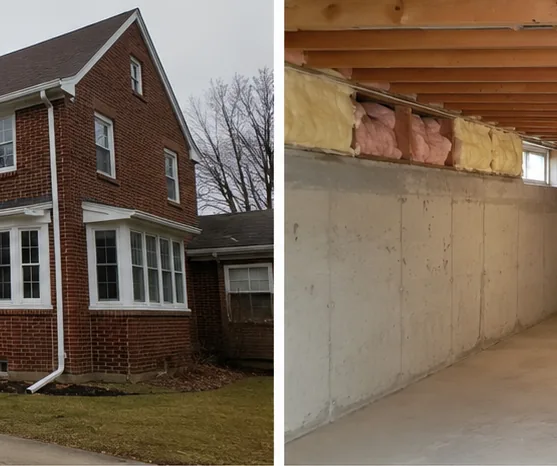
How a Burnsville Inspection Report Becomes Leverage
A finished basement is the cleanest example of why the report matters to your deal. In Burnsville's 1970s and 1980s homes, the most appealing feature — a finished lower level — is also where the most expensive problems hide. Behind that drywall and drop ceiling can sit an old cast-iron drain stack corroding through, a foundation crack that's been painted over, moisture wicking up from glacial-till clay soil, or a Federal Pacific panel quietly waiting to be flagged on the buyer's insurance application. None of that shows on a listing photo. All of it shows in a SPEC report, with photographs.
That documentation is what converts a vague worry into a concrete negotiating position. "I think the basement might have issues" gets a seller nowhere. "Your inspector's report documents active moisture at the northwest foundation wall and a panel the insurer won't cover, here are the photos" changes the conversation entirely. Your agent isn't arguing feelings; they're presenting a third-party professional's findings. That's why inspection-driven negotiations in Burnsville routinely produce repair credits or price adjustments — the report does the persuading for you.
The point isn't to nickel-and-dime a seller over cosmetic items. A good inspection helps you separate the genuinely material from the merely imperfect. Every house we inspect has findings; a thirty-year-old home will always have a list. The report's color-coding and our walk-through help you focus your negotiation on the few items that actually affect safety, structure, and major-system life expectancy — and let the small stuff go. Knowing the difference is exactly what protects the deal from falling apart over things that don't matter.
Burnsville-Specific Findings That Move Deals
Because Burnsville's housing clusters into known eras, the findings that drive negotiations here are predictable. Knowing them in advance helps you read your own report and budget for what's coming. A few of the recurring ones:
- Aluminum branch wiring (1965–1976 homes). Common in original Crystal Lake and Buck Hill split-levels. It's a known fire-risk and an insurance flag unless properly remediated — a frequent and legitimate negotiation item. See our aluminum wiring findings page.
- Federal Pacific and Zinsco panels. Still in service in many 1970s homes, these panels have documented failure-to-trip issues and often draw insurer pushback. A flagged panel is one of the clearest repair-credit candidates in a Burnsville deal.
- Polybutylene plumbing (late-1980s to early-1990s). Concentrated in the Sunset Pond and County Road 42 colonials. Gray supply lines with crimp fittings are a recognized leak and insurance risk.
- Bath fans venting into the attic. The single most common cause of attic sheathing mold we find in Burnsville — cheap to fix, but a finding buyers want addressed before closing.
- Bluff-edge and soil movement. River Hills homes near the Minnesota River bluff show step-cracking that needs context, not panic; glacial-till clay heaves with frost across the central belt. Our foundation crack guide explains how we evaluate it.
Two add-on inspections matter especially in Burnsville and are worth scheduling alongside the main inspection. Because Dakota County sits in an EPA elevated-radon zone, radon testing belongs on nearly every transaction here. And because pre-1985 homes typically have aging clay or cast-iron sewer laterals running through mature tree roots, a sewer scope inspection can surface a five-figure repair that no visual inspection would ever catch. Both are findings sellers and buyers negotiate over constantly — and both are far cheaper to discover now than after closing.
Peace of Mind Is the Real Deliverable
It's easy to frame the inspection purely as a negotiating tool, but the deeper value is what you carry into the home after closing. The report you receive isn't a one-time bargaining chit you throw away — it's a maintenance roadmap for the house you now own. Color-coded priorities tell you what to address in the first ninety days versus what to budget for over the next five years. The roof's remaining service life, the furnace's age, the water heater's installation date, the panel's condition: those aren't just negotiation items, they're your forward maintenance calendar.
For buyers, that's the difference between moving in anxious and moving in informed. You're not lying awake wondering whether the furnace is about to die — you know its age and condition because it's documented. For the many buyers who attend the final walk-through, the peace of mind is even more direct: you've stood in the basement with the inspector, seen the findings in person, and asked your questions face to face. You move in knowing the house, not hoping about it.
Selling a Burnsville Home? Consider a Pre-Listing Inspection
The buyer journey is only half the story. If you're listing a Burnsville home — especially one from the 1970s, 80s, or early 90s — a pre-listing inspection is one of the strongest, most underused moves available to you. Order the inspection before you list, and you learn about the aluminum wiring, the aging panel, the polybutylene supply lines, or the attic-venting issue on your own timeline, not in the middle of a buyer's contingency window when leverage has shifted against you.
That early knowledge lets you choose your response. You can repair the item and market the home as inspection-ready, you can price it in honestly and disclose it cleanly, or you can simply be prepared with documentation when the buyer's inspector raises it. Either way, you've removed the surprise — and surprises are what blow up Burnsville transactions and force last-minute price concessions. Sellers who go in informed keep control of the negotiation. To talk through whether a pre-listing inspection fits your situation, reach out or call 218-600-2938.
Why SPEC for Your Burnsville Transaction
- Report in 24 hours — delivered within four hours of inspection, protecting your contingency-window timeline.
- 120-point evaluation — every major system documented; see the full breakdown.
- FLIR thermal imaging available — surfaces hidden moisture, missing insulation, and electrical hot spots behind finished walls.
- InterNACHI Master Inspector — credentialed, licensed in Minnesota, and insured.
- Built around Burnsville's eras — we know which neighborhood sits on which soil and which decade carries which defect before we arrive.
- Add-ons that match local risk — radon and sewer scope scheduled alongside the inspection so you negotiate from a complete picture.
- You're welcome on-site — the final walk-through turns a report into real understanding.