Negative Grading & Drainage in Burnsville Homes
What Negative Grading Is
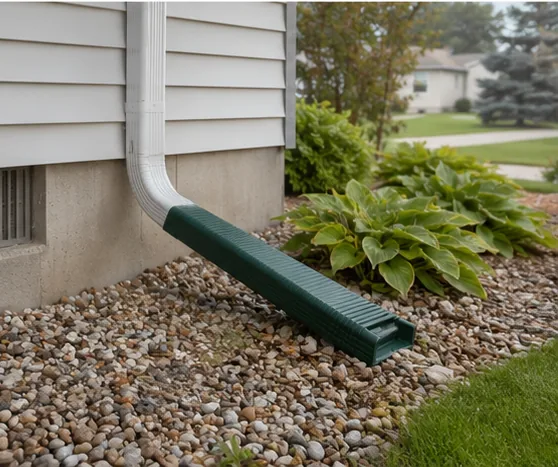
Grading is the slope of the soil around your foundation. Proper grading falls away from the house — the recommended standard is roughly six inches of drop over the first ten feet — so rain and snowmelt run away from the foundation. Negative grading is the opposite: soil that's flat or slopes back toward the house, sending water straight to the foundation wall, where it collects, soaks in, and finds its way to the basement. Paired with downspouts that discharge at the foundation instead of carrying water away, it's the most common defect we document in Burnsville.
Why It Matters in Burnsville
Burnsville's central-county glacial till is high in clay. Clay holds water against the foundation and exerts hydrostatic pressure on the wall, so the consequences of grading water toward the house are amplified here compared with sandy soils. Original backfill settles over the decades after construction, so even homes that started with good grading develop negative slope and settled trenches along the foundation by the time they're 20–30 years old. This is why the finding cuts across every era — from 1970s Crystal Lake splits to 2010s infill.
Common Causes
The usual contributors are settled backfill creating a reverse slope, downspouts and downspout extensions that dump at the wall, patios, driveways, and walkways that slope toward the house, missing or buried gutters, window wells without drainage, and landscaping or mulch beds built up above the foundation that trap water. Air-conditioner condensate lines and sump discharge lines that release next to the foundation make it worse.
Risks If Left Unaddressed
Negative grading is the root cause behind most wet basements, efflorescence, and cove-joint seepage we find. Chronic foundation saturation can also contribute to foundation cracking and movement, frost-related issues, and the damp conditions that grow mold. The good news: it's frequently the cheapest high-impact fix in the whole report.
What We Look For
SPEC evaluates the slope at every foundation elevation, traces every downspout to its discharge point, checks hardscape pitch, looks for settled trenches and reverse slope at the wall, and inspects window wells and sump/condensate discharge. Inside, we correlate exterior grading with interior moisture evidence on the basement walls and floor. Thermal imaging helps confirm active moisture intrusion that ties back to a grading problem outside.
Solutions & Repair Costs
Most grading fixes are inexpensive and high-return. Re-sloping soil and adding downspout extensions to carry water 6–10 feet from the house often runs a few hundred dollars. Regrading a larger area with fill and reestablishing positive slope runs into the low four figures. Buried downspout drain lines to daylight or a dry well, or correcting a settled patio, cost more. We document the finding and recommend a landscaping or drainage contractor; we don't quote the repair.