Soffit / Fascia Rot
What This Defect Means
A defect found on inspection is not the end of a transaction — it's the start of an informed decision. Defects fall into a clear hierarchy: cosmetic (you can live with it indefinitely), maintenance-deferred (address in the next 6-24 months), prudent-soon (address in the next 12 months to prevent escalation), and immediate (negotiate or remediate before closing). Every finding in a SPEC report is photo-documented, with location, severity, and recommended next step. The goal isn't to scare you out of the house. The goal is to make sure you're walking in with both eyes open.
Burnsville's housing stock — heavy 1965-1995 buildout, glacial-till and bluff geology, 50-inch winters with deep frost — produces a defect profile distinct from generic Twin Cities suburbia. The same finding that's a non-issue in a 2015 Lakeville build can be a serious concern in a 1976 Crystal Lake split-level, and vice versa. Context matters. Our reports make that context explicit.
Common Causes in Burnsville
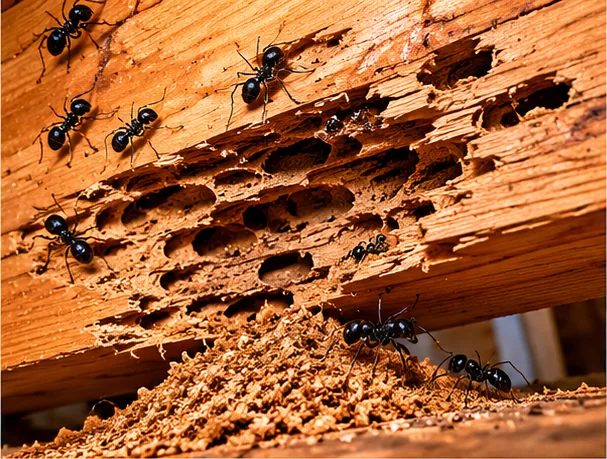
Most Burnsville defects trace to one of five root causes: original-construction shortcuts standard to the era, deferred maintenance over decades of ownership, climate-driven wear (50-inch winters, freeze-thaw, ice damming), soil-driven movement (glacial-till hydrostatic pressure, outwash-sand settlement, bluff-edge geology), or DIY modifications layered over original work without permits. Identifying the root cause is more important than identifying the symptom — and that's where detailed-detail inspection earns its keep.
We document each finding with cause attribution where the evidence supports it. A wet basement isn't just "wet" — it's "negative grading at the south elevation, downspout dumping at the foundation, and likely cove-joint failure at the back wall." A failed deck isn't just "failed" — it's "ledger flashing missing, lag bolts undersized, post bases on concrete piers below frost depth." The repair scope that follows from a precise diagnosis is dramatically narrower (and cheaper) than the repair scope that follows from a vague one.
Safety Considerations
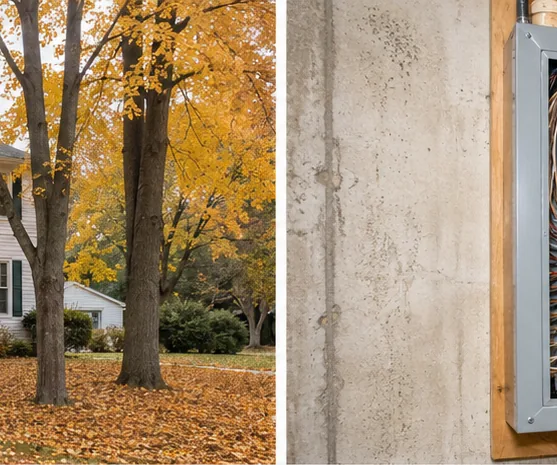
Some defects rise to the level of immediate safety concern. Federal Pacific Stab-Lok and Zinsco electrical panels have documented failure-to-trip behavior under fault conditions, creating fire risk regardless of how "fine" the panel appears in service. Cracked heat exchangers in furnaces past 20 years can introduce carbon monoxide into the living space and need verification by a licensed HVAC contractor. Knob-and-tube wiring buried in modern blown-in insulation poses a documented fire risk. Asbestos-cement siding in good condition is not a panic situation, but renovation, demolition, or impact damage triggers professional abatement requirements. We flag every safety-tier finding in the executive summary, with recommended response timeline.
Radon is the long-tail safety finding that requires testing rather than visual inspection. Dakota County is in the EPA elevated-radon zone, and Burnsville basement test results routinely exceed the 4.0 pCi/L action level. Radon is invisible, odorless, and the second-leading cause of lung cancer per the CDC. Testing is recommended on every Dakota County home inspection, and mitigation via sub-slab depressurization is straightforward when warranted.
Repair Considerations
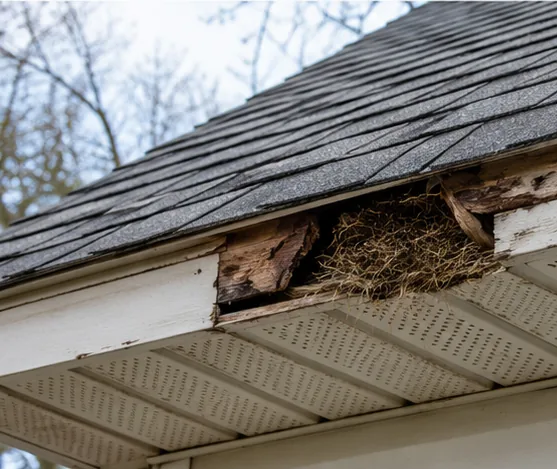
Repair scope is driven by severity, accessibility, and code requirements. Cosmetic findings (efflorescence in a dry basement, hairline shrinkage cracks in foundation walls, light surface mold on attic sheathing) often need monitoring rather than active intervention. Functional findings (failed sump pump, missing sump backup, undersized service amperage) need scheduled remediation. Structural and safety findings (active foundation movement, FPE panels, cracked heat exchangers) need professional remediation before closing or as a negotiated condition.
The cost ranges that get attached to defect findings vary widely by scope, contractor, and timing. A spot sewer-line repair runs in the mid-four to low-five-figure range; a full lateral replacement is dramatically higher. A Polybutylene re-plumb to PEX scales with home size. Foundation repair scope ranges from a $400 epoxy injection on a single shrinkage crack to a full $30,000+ wall stabilization. Our reports identify the finding with photo evidence and recommend the appropriate professional trade for the repair quote — we don't quote repair costs ourselves.
The negotiation question — repair before closing, repair as a credit, or accept and remediate post-closing — is between you, your agent, and the seller. Our job is to give you the best possible factual basis for that conversation. Most SPEC reports are used to negotiate $5,000 to $15,000 in concessions or repair credits.
How We Inspect for This in Burnsville
Identifying the defect is only half the work — locating its full extent and root cause is what separates a inspection from a generic one. SPEC arrives at every Burnsville inspection with the equipment loadout to surface the defect everywhere it lives, not just where it's already visible. FLIR thermal imaging available as optional add-on. Calibrated moisture meter for suspect drywall and framing. RIDGID color sewer scope on scheduled add-on. Continuous radon monitor on scheduled add-on. Drone for unsafe-to-walk roof pitches. Combustion analyzer for furnace and water heater testing. Each tool exists for a reason and gets deployed when the evidence calls for it.
The Burnsville-specific inspection priority on this defect: we know the era profile and neighborhood profile most likely to produce it, and we focus disproportionate attention there. The 1965-1976 Crystal Lake-area split-levels and original Buck Hill subdivisions, the 1986-1995 Sunset Pond and Crosstown Estates two-story colonials, the 1970s-90s River Hills custom homes, and the post-2010 Heart of the City infill each carry distinct defect clusters. Knowing which cluster applies to your property before we step on-site sharpens the inspection focus dramatically.
Documentation is the second half. Every finding gets a photo, a location annotation, a severity rating, and a recommended next step. The Spectora-platform report we deliver is searchable, sortable by priority, and formatted for use at the negotiation table. Your real estate agent gets a one-page executive summary suitable for handing to the listing agent.
Negotiation Framework for This Defect
Inspection findings fall into four negotiation tiers, and the appropriate negotiation tactic varies by tier. Tier 1 — safety findings (Federal Pacific panels, cracked heat exchangers, knob-and-tube in modern blown-in insulation, active foundation movement) — are typically negotiated as seller-funded repair before closing or as a closing-cost credit large enough to fund the repair after closing. The buyer's leverage is high here; the issue is documented, the cost is meaningful, and the seller's disclosure obligations are heightened.
Tier 2 — major-system end-of-life findings (furnace past 25 years, water heater past Years, roof past 25 years, original cast-iron drain stack with corrosion-through evidence) — are typically negotiated as a partial credit. The system is still functioning; the buyer is taking on the replacement timeline; the seller offsets a portion of the cost. Tier 3 — deferred maintenance (gutters, soffit/fascia, exterior caulking, attic insulation upgrade, sump pump backup) — is typically negotiated as a small credit or accepted at the original price. Tier 4 — cosmetic findings — usually isn't negotiated, but you walk in with full knowledge.
The defect on this page generally falls into Tier 1 or Tier 2 depending on extent and condition. Our report makes that explicit so your negotiation conversation starts with clarity, not interpretation.
Burnsville-Specific Context
Where in Burnsville the defect appears tells you a lot about its likely cause and likely scope. The Crystal Lake-area 1970s ramblers and original Buck Hill splits cluster around aluminum branch wiring, FPE/Zinsco panels, original cast-iron drain stacks, and bath-fan-into-attic mold patterns. The Sunset Pond and Crosstown Estates 1986-1995 subdivisions cluster around Polybutylene plumbing and LP/Masonite siding failures. River Hills and Tamarack — premium wooded lots, 1970s through 1990s — cluster around bluff-edge foundation movement, ice damming on north-facing eaves, and soffit/fascia rot. Heart of the City and post-2010 infill cluster around new-construction defects: deck-ledger flashing, HVAC commissioning, EIFS issues. Knowing the neighborhood profile before we arrive sharpens the inspection focus.
Climate adds the second layer. Burnsville averages 50+ inches of snow, persistent sub-zero winter stretches, and 42-60 inch frost depth. That climate produces ice damming on under-insulated north-eave roofs, frost-heave damage on shallow garage slabs, freeze-thaw deterioration on basement walls and exterior concrete, and humidity-driven mold in vented summer crawl spaces. Burnsville-specific defect findings track all five seasonal stressors over decades.