What Defects Are Most Common in 1970s Burnsville Homes?
Quick answer: The most common defects in 1970s Burnsville homes are aluminum branch wiring (1965–1976), Federal Pacific and Zinsco electrical panels, original clay or cast-iron sewer laterals prone to root intrusion, bath fans venting into the attic (causing attic mold), under-insulated attics that drive ice dams, and aging cast-iron drain stacks. These are era-specific, predictable, and exactly what a Burnsville-experienced inspector looks for on a split-level or rambler from this period.
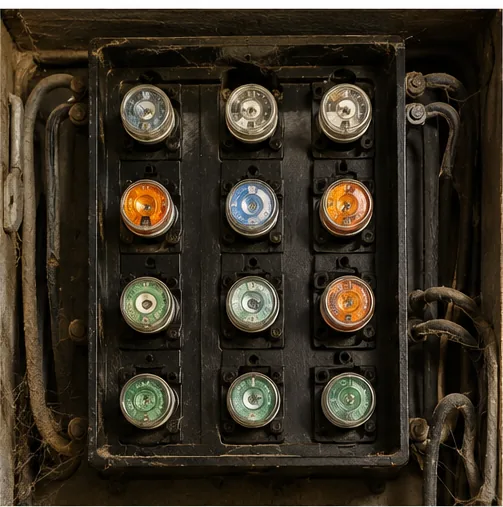
The 1970s Burnsville defect cluster
Burnsville's first big buildout wave ran from 1965 to 1979 — the split-levels and ramblers concentrated around Crystal Lake and the original Buck Hill subdivisions. Homes of this era share a remarkably consistent defect profile, because they were built with the materials and practices standard at the time. Knowing the cluster lets an inspector focus where the problems actually live.
| Defect | Why it's common | Severity |
|---|---|---|
| Aluminum branch wiring | Standard 1965–1976; connections loosen and overheat | Safety — remediate or pigtail with COPALUM |
| Federal Pacific / Zinsco panels | Documented failure-to-trip under fault | Safety — replacement recommended |
| Clay / cast-iron sewer lateral | Original material degrades; roots intrude at joints | Major — scope to confirm condition |
| Bath fan venting into attic | Era practice; dumps moisture under the roof | Moderate — drives attic mold |
| Under-insulated attic | Lower era R-values; causes ice dams | Moderate — energy loss + ice-dam leaks |
| Cast-iron drain stack | Internal corrosion after 50 years | Major — watch for corrosion-through |
| Galvanized water lines | Internal rust narrows flow over decades | Moderate — reduced pressure, eventual leaks |
Electrical is the headline risk
The two electrical findings — aluminum branch wiring and a Federal Pacific or Zinsco panel — are the highest-priority items on most 1970s Burnsville homes because they're genuine fire-safety issues. Both are remediable (re-wire or COPALUM connectors for the wiring, a panel swap for the panel), and both are strong negotiation points when documented in the report. See our aluminum wiring and Federal Pacific / Zinsco panel pages.
The moisture story
The second cluster is moisture-driven. Era bath fans were often vented straight into the attic, and era attic insulation was thin by today's standards. Together they produce the classic Burnsville combo: attic mold on the sheathing and ice-dam damage on north-facing eaves every hard winter. Both are fixable with proper venting and added insulation.
A real Burnsville example
A 1974 split-level near Crystal Lake hit nearly the whole list: aluminum branch wiring, a Federal Pacific panel, a bath fan dumping into the attic with visible sheathing mold, and a clay sewer lateral with root intrusion the scope confirmed. None of it was a surprise to the inspector — it's the textbook 1970s cluster. The buyer used the documented findings to negotiate a panel replacement, COPALUM wiring connectors, fan re-venting, and a sewer spot repair, turning a daunting list into a clear, fundable plan.