Attic Ventilation Problems in Burnsville Homes
What Attic Ventilation Does
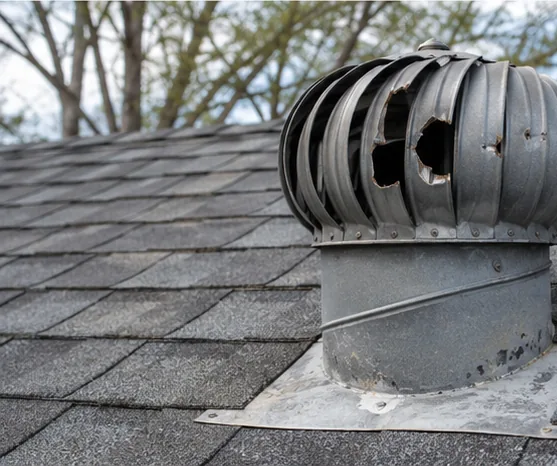
A properly vented attic moves outdoor air continuously from low intake vents at the soffit up to exhaust vents at or near the ridge. That airflow does two critical jobs in Burnsville's climate: in winter it keeps the roof deck cold so snow melts evenly instead of refreezing at the eaves, and year-round it carries away the moisture that rises out of the living space. When the airflow is interrupted, both jobs fail at once.
Why It Matters in Burnsville
Burnsville averages more than 50 inches of snow a year and endures long sub-zero stretches. A poorly ventilated attic in that climate is the direct cause of two of the most common — and most expensive — findings we document. First, ice dams: warm spots on the roof deck melt snow, the meltwater refreezes over the cold eave, water backs up under the shingles, and it leaks into the wall and ceiling. Second, attic moisture and mold: insufficient airflow lets humid indoor air condense on the cold underside of the roof sheathing, feeding the gray-black surface mold we frequently photograph on Burnsville roof decks.
Common Causes
The usual culprits are insulation stuffed into the soffit and blocking intake airflow (no baffles installed), painted-over or screened-shut soffit vents, an imbalance between intake and exhaust area, and — extremely common in 1965–1995 Burnsville homes — bathroom and kitchen exhaust fans that terminate in the attic or dump into a soffit instead of venting fully to the exterior. That last one pumps a shower's worth of moisture straight into the attic every day.
Risks If Left Unaddressed
Chronic attic moisture rots roof sheathing, degrades insulation R-value, grows mold, and shortens shingle life from the underside. Ice dams cause interior water damage, stained ceilings, and saturated wall cavities. Both problems compound every winter until the airflow is corrected.
What We Look For
SPEC inspects the attic for clear soffit intake, proper baffles, adequate ridge or roof exhaust, and the correct intake-to-exhaust balance. We trace every bath and kitchen fan to confirm it discharges to the exterior, not into the attic. We document moisture staining and mold on the sheathing and check insulation depth and coverage. On the roof we look for the melt patterns and ice-dam evidence that point back to a ventilation problem. Thermal imaging reveals where warm air is escaping into the attic.
Solutions & Repair Costs
Fixes are usually affordable relative to the damage they prevent. Adding baffles and clearing blocked soffits runs a few hundred dollars; re-routing a bath fan to a proper roof or wall cap is typically a few hundred per fan; adding ridge or roof vents and rebalancing the system runs into the low four figures on a larger roof. Where mold is already present on the sheathing, remediation is a separate scope — see our attic mold page. We recommend a licensed roofer or insulation contractor for the repair quote.