Missing GFCI Protection in Burnsville Homes
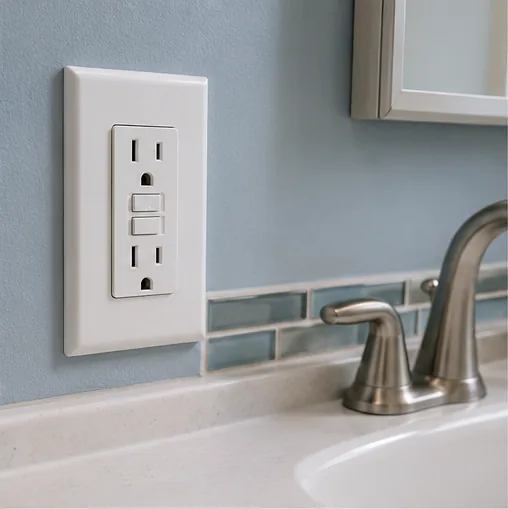
What GFCI Protection Is
A Ground-Fault Circuit Interrupter (GFCI) is a fast-acting safety device that monitors the current flowing out to a device and back. If it detects even a tiny imbalance — current leaking through a person to ground, for example — it cuts power in a fraction of a second. GFCIs are built into special outlets (the ones with TEST and RESET buttons) or into breakers at the panel. They are the single most important shock-prevention device in a home, and code has required them in an expanding list of locations since the 1970s.
Why It Matters in Burnsville
Most Burnsville homes predate today's GFCI requirements. A 1972 Crystal Lake split-level was built when GFCIs were required only at exteriors and pools; a 1988 colonial predates the kitchen-counter and garage requirements; even many 2000s homes lack the basement and laundry coverage required today. The result is that missing or non-functional GFCI protection is one of the most common findings we document — it appears on the large majority of inspections. It is a true safety finding: these locations are wet or grounded environments where a fault can be fatal.
Where GFCIs Are Required Today
Current code calls for GFCI protection at bathroom receptacles, kitchen countertop receptacles, garages and accessory buildings, outdoor receptacles, crawl spaces, unfinished basements, laundry areas, and within six feet of any sink or wet bar. A Burnsville home is rarely fully compliant unless it has been recently updated.
Common Causes
The finding usually traces to the home simply being older than the relevant code edition, to a remodel that added a fixture without adding protection, or to a previously installed GFCI that has failed and no longer trips on TEST. DIY outlet swaps that replace a GFCI with an ordinary receptacle are also common.
Risks If Left Unaddressed
The risk is electric shock and electrocution at exactly the locations where people stand on wet floors or handle appliances near water — bathrooms, kitchens, garages, and basements. This is the reason GFCIs exist, and it's why we flag missing protection as a safety-tier item rather than a cosmetic one.
What We Look For
SPEC tests every accessible receptacle in a GFCI-required location with a calibrated tester, confirms that protected outlets actually trip and reset, and checks for proper coverage at the panel. We also check for the related reversed-polarity and ungrounded conditions that frequently appear alongside missing GFCI protection in older Burnsville wiring. Every finding is photo-documented by location.
Solutions & Repair Costs
This is one of the most affordable safety upgrades in a home. A licensed electrician can replace a standard receptacle with a GFCI for roughly $20–$50 in parts plus labor, or protect an entire circuit with a single device at the first outlet or a GFCI breaker. Whole-home coverage of all required locations typically runs a few hundred dollars. We identify the gaps and recommend a licensed Minnesota electrician for the work.