Burnsville Home Inspection Statistics (2026)
The 100-word answer: Across SPEC Home Services' Burnsville field inspections, almost every home produces at least one exterior moisture-management finding (negative grading, downspouts at the foundation, clogged gutters), and the most common system defects are electrical safety items — missing GFCI protection, reversed-polarity outlets, and double-tapped breakers. Defect density rises sharply with age: 1965–1979 Crystal Lake and Buck Hill split-levels cluster aluminum wiring, Federal Pacific/Zinsco panels, and cast-iron drains; 1980–1995 colonials cluster polybutylene plumbing; post-2010 infill shows new-construction workmanship issues. Dakota County sits in EPA Radon Zone 1, so elevated radon is common. Below is the data, by system and by era.
How to Read This Data
The figures below reflect SPEC's local Burnsville and Dakota County field observations — the relative frequency at which specific findings appear during full home inspections, expressed as a share of inspections where the relevant system or component was present and accessible. They are field-frequency indicators, not a controlled scientific census. Where a statistic is general rather than local, we cite the source (EPA, InterNACHI, CPSC). The purpose is orientation: knowing which findings are common for a given home age lets you anticipate the inspection before you write the offer. Every actual finding on your home is still individually verified, photo-documented, and severity-rated in your report.
One framing point that matters more than any single number: a high count of findings is normal and not alarming. A typical inspection on an older Burnsville split-level surfaces dozens of items, but the overwhelming majority are cosmetic or routine maintenance. The numbers that drive negotiation are the safety-tier and major-system findings, and those are far rarer. Read the tables with that filter in mind.
Most Common Defects We Find (All Ages Combined)
Pooling inspections across every era, a consistent top-ten emerges. Exterior water management dominates because it is climate-independent of construction date — grading settles, gutters clog, and downspouts get disconnected on a 1972 rambler and a 2018 infill alike. Electrical safety findings rank high because code requirements (GFCI, AFCI, proper polarity) tightened over the decades, leaving most older homes non-compliant by current standards even when originally code-legal.
| Rank | Finding | Approx. frequency* | Typical severity tier |
|---|---|---|---|
| 1 | Exterior grading / drainage issues (negative grading, downspouts at foundation) | ~80% | Maintenance → Functional |
| 2 | Missing or non-functional GFCI protection | ~70% | Safety |
| 3 | Gutter / downspout deficiencies | ~65% | Maintenance |
| 4 | Roof wear — granule loss, aging shingles, flashing | ~55% | Functional → Major |
| 5 | Attic ventilation / insulation deficiencies | ~50% | Functional |
| 6 | Reversed-polarity or ungrounded outlets | ~45% | Safety |
| 7 | Minor foundation cracking (shrinkage, settlement) | ~45% | Cosmetic → Functional |
| 8 | Water heater age / TPR / connection issues | ~40% | Functional → Major |
| 9 | Plumbing leaks, corrosion, improper traps | ~35% | Functional |
| 10 | Bath fan venting into attic / soffit (→ moisture) | ~30% | Functional |
*Approximate share of SPEC Burnsville inspections where the component was present and accessible. Local field indicator, not a scientific survey.
Defects by Home Age: The Three Burnsville Waves
Burnsville incorporated in 1964 and built out in three clear waves. Defect probability tracks those waves more tightly than any other variable — more than neighborhood, more than price point, more than lot size. The table below contrasts the era-defining defect clusters.
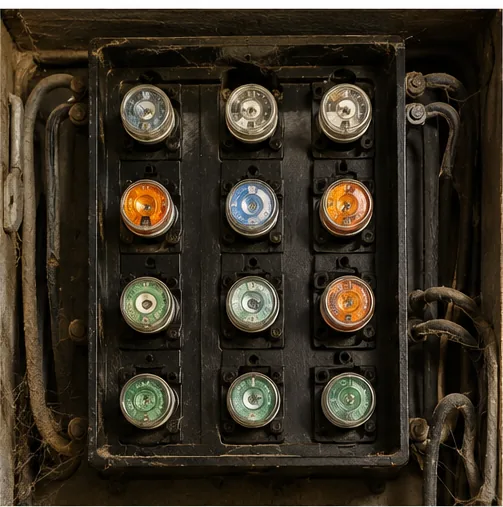
| Defect cluster | 1965–1979 splits/ramblers (Crystal Lake, Buck Hill) | 1980–1995 two-story colonials (Sunset Pond, Crosstown Estates) | Post-2010 infill (Heart of the City) |
|---|---|---|---|
| Aluminum branch wiring | Common (1965–76) | Rare | None |
| FPE / Zinsco panels | Common if not updated | Occasional | None |
| Polybutylene plumbing | Rare | Common (late-80s/early-90s) | None |
| Cast-iron drain stacks | Common, often corroding | Some, better condition | None (PVC) |
| Bath fan / attic venting | Common | Common | Occasional (commissioning) |
| Deck ledger flashing | Aged / DIY add-ons | Aged / DIY add-ons | Common new-build defect |
| Failed window seals | Very common (original units) | Common | Rare |
| HVAC past lifespan | Frequent | First-gen 90%+ aging out | Rare |
Roof, Foundation, Electrical & Sewer Issues by Age
The four highest-cost systems each follow a predictable aging curve in Burnsville's climate (50+ inches of annual snow, 42–60 inch frost depth, hard freeze-thaw cycling). The table below shows how the probability of a meaningful finding in each system rises with home age in SPEC's field data.
| System | Homes built 2010+ | 1996–2009 | 1980–1995 | 1965–1979 |
|---|---|---|---|---|
| Roof — granule loss / past mid-life | Low | Moderate | High (2nd/3rd roof) | High |
| Foundation — cracking / movement | Low–Mod (settlement) | Moderate | Moderate–High | High |
| Electrical — safety findings | Low | Moderate | High | Very High |
| Sewer — bellies / root intrusion | Low | Low–Moderate | Moderate | High (clay/cast-iron) |
| Water heater — past lifespan | Low | Moderate | High | High |
The sewer line is the single finding most worth pre-empting on a pre-1985 Burnsville home. Clay and cast-iron laterals 40–60 years old, running through soil dense with mature silver-maple and oak roots, produce bellies, offsets, and root intrusion at high rates. A sewer scope is the only way to see it, and the repair sits in the highest cost tier — which is exactly why it belongs in your inspection, not your first winter as an owner.
Dakota County Radon Statistics
Radon is the one major finding that visual inspection cannot reveal — it requires a 48-hour test. Dakota County's standing here is unambiguous.
| Metric | Figure | Source |
|---|---|---|
| EPA Radon Zone for Dakota County | Zone 1 (highest priority) | EPA Map of Radon Zones |
| EPA action level | 4.0 pCi/L | EPA |
| MDH recommendation | Test every home; mitigate at/above 4.0 | Minnesota Dept. of Health |
| Statewide MN homes above action level | ~2 in 5 (about 40%) | Minnesota Dept. of Health |
| SPEC Burnsville basement test range (typical) | 4–6 pCi/L, tail above 8 pCi/L | SPEC field data |
| Radon as cause of lung cancer (US) | 2nd-leading cause; leading among non-smokers | EPA / CDC |
The geological basis is uranium-bearing glacial soil across the central-county till belt, with limestone-bedrock proximity adding load in the bluff-edge neighborhoods like River Hills. Mitigation via sub-slab depressurization is straightforward and effective. See our radon defect page and radon testing service for detail, and the Minnesota Department of Health's radon program for statewide guidance.
What the Numbers Mean for Your Negotiation
Inspection findings sort into four tiers, and only the top two typically drive price. Tier 1 — safety (FPE/Zinsco panels, missing GFCI, active foundation movement, elevated radon) — is usually negotiated as a seller-funded repair or a credit large enough to fund it. Tier 2 — major-system end-of-life (roof, HVAC, water heater, corroded cast-iron stack) — is usually a partial credit reflecting the buyer absorbing the replacement timeline. Tier 3 (deferred maintenance) and Tier 4 (cosmetic) rarely move the number but inform your maintenance plan. SPEC reports are color-coded by tier so the conversation starts with clarity. Most reports get used to negotiate $5,000–$15,000 in concessions or repair credits, but those dollars come from the Tier 1 and Tier 2 items — not the dozens of cosmetic notes.
Explore the Full Defect Library
Every statistic above links to a detailed finding page explaining what it is, why it matters in Burnsville specifically, and what repair looks like. Browse the complete Burnsville defect library, see what a finished report looks like on our sample report, review the systems we cover in the inspection checklist, or read the county-wide picture on our Dakota County inspection page.
Related Resources
- Standard Home Inspection — the 120-point evaluation behind this data
- Radon Testing — 48-hour continuous monitoring
- Sewer Scope — essential on pre-1985 homes
- Full Defect Library — every finding explained
- Dakota County Home Inspection — the county-wide profile
- Master FAQ
- Service Area — the 12 cities we serve
- Sample Report