Burnsville Split-Level Inspection
The 100-word answer: The split-level is Burnsville's signature house. Built by the thousands during the 1965-1979 boom after the city incorporated in 1964, the four-level and tri-level split defines the older neighborhoods. Inspecting one is its own discipline: the lower level is partially below grade, so it behaves like a finished basement and is the number-one moisture risk. The staggered framing adds intermediate beams, bearing points, and half-flight stairs to check. And the era ties the house to a known defect cluster — aluminum wiring, Federal Pacific or Zinsco panels, cast-iron drains, and bath fans venting into attics. We inspect to that profile.
Why the Split-Level Defines Burnsville
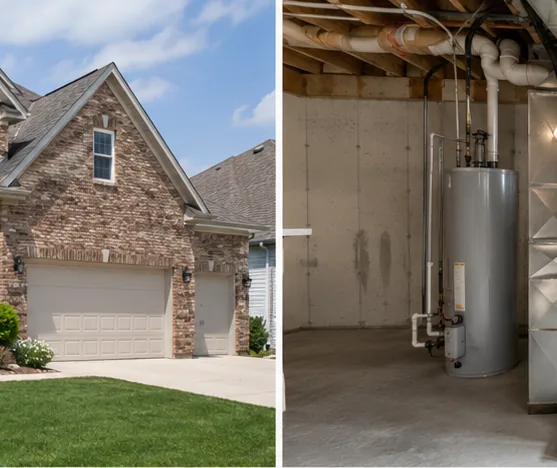
When Burnsville incorporated in 1964, it was a small community on the edge of explosive metro growth. The 1965-1979 buildout that followed filled the city with the design of the moment: the split-level. Whole neighborhoods — around the Crystal Lake area, the older County Road 42 corridor, and the established core north of Highway 13 — went up as tri-levels and four-level splits. That is why, when you tour homes in older Burnsville, you keep walking into the same floor plan: a few steps up to bedrooms, a few steps down to a family room, garage tucked under one wing. Because they were built in such a tight window, Burnsville's splits share not just a layout but an age, and with that age comes a remarkably consistent defect profile.
Inspecting a split-level is therefore both an architectural exercise and a 1970s-era systems exercise. The staggered geometry creates structural details a two-story doesn't have, and the build year all but guarantees we'll be looking at period wiring, panels, plumbing, and venting. We approach every Burnsville split with that dual lens.
The Lower Level: The #1 Moisture Risk
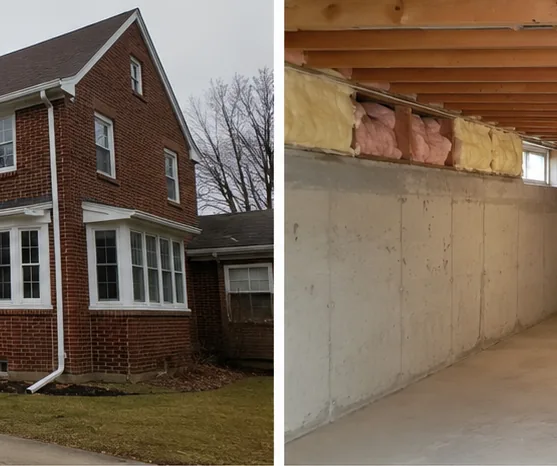
The defining trait of a split-level is the lower level that sits partially below grade on at least one side. It's usually finished — paneled family room, an extra bedroom, a bath — and lived in daily. Structurally, though, that level is a basement, and it gets treated by water exactly like a basement. Burnsville's glacial-till clay soil holds water against below-grade walls, original 1970s grading was often flat or even pitched toward the house, and decades of settled landscaping make it worse. Water arrives through wall-floor cove joints, window wells, and below-grade wall cracks, and because the space is finished, it hides behind drywall and carpet until it's a real problem.
This is why we run FLIR thermal imaging across the lower level on every split inspection, looking for the temperature signatures of active or past moisture behind finished surfaces. We check the base of below-grade walls, the window wells, and the sump system. The wet basement causes findings page details exactly what drives this, and the efflorescence page covers the mineral staining that signals past water entry.
Staggered Framing and Structure
A split-level's framing steps up and down between levels, which introduces structural details a simple two-story doesn't have: intermediate beams, additional bearing points where one level's floor lands on another's wall, and short half-flights of stairs at every transition. We check the beam pockets and the bearing under each level change, and we look at door and window frames at the transitions because a sagging beam or settling bearing point shows up as sloped floors and out-of-square openings right where the levels meet. The lower-level slab-to-mid-level-floor junction is a specific spot we always examine. For anything that needs a deeper structural look, our foundation inspection goes further, and the foundation crack page explains crack patterns.
Electrical: The 1970s Panel and Wiring Problem
Splits built in the 1965-1976 window are textbook candidates for aluminum branch wiring, and a large share still run on Federal Pacific Stab-Lok or Zinsco panels that are documented to fail to trip under fault conditions. A panel-and-wiring finding is one of the most common high-priority items in our split-level reports. We open the panel, identify the equipment, check for double-tapped breakers and improper connections, and document the condition of aluminum terminations. Our electrical inspection covers the full system in detail.
Bath Fans, Roof Planes, and Attic Mold
Splits have multiple roof planes and short, broken-up attic spaces because of the staggered levels. That geometry makes it easy for a bath or laundry fan to be vented into the attic or a soffit instead of fully outside, and 1970s builders frequently did exactly that. Over decades the moisture feeds attic-sheathing mold. We trace every fan to its termination and confirm it exits the building envelope. We also check each roof plane and valley, since the multiple planes mean more flashing and more places for ice-dam damage on north-facing eaves.
Plumbing and Sewer
Pre-1985 splits typically have original cast-iron drain stacks and a clay or cast-iron sewer lateral, both now decades old and running under mature trees. We strongly recommend a sewer scope on any pre-1985 Burnsville split — bellies and root intrusion are routine. Late-80s splits may have polybutylene supply lines, which we flag on sight.
What Split-Level Buyers Most Often Miss
- Treating the lower level as "just a finished room." It's a below-grade space with all the water risk of a basement, hidden behind finishes.
- Old grading. Flat or negative grading around a 1970s split is the root cause of most lower-level moisture and is fixable — but only if you know about it.
- The panel. A Federal Pacific or Zinsco panel is a real safety issue, not a cosmetic one, and it's common in these homes.
- Radon. The large below-grade floor area is a significant radon entry surface; Burnsville sits in an elevated-radon zone. We recommend radon testing on every split.
Local Burnsville Context
Burnsville's split-levels are concentrated in the first-wave neighborhoods — Crystal Lake area, the established core, and the older stretches of the County Road 42 corridor. Central Burnsville's glacial-till clay soil is frost-active and water-holding, which is exactly why lower-level moisture and grading are such consistent split-level findings. The south-Burnsville Buck Hill area sits on outwash sand and behaves differently. We build the split-level inspection around that geology and the tight 1965-1979 build window that produced these homes. For the broader county picture, see our Dakota County home inspection overview.
Related Burnsville Inspection Pages
- Burnsville home inspection — what's included and the timeline
- Your Burnsville home inspector — credentials and local expertise
- Burnsville rambler inspection — single-level homes
- Burnsville townhome inspection — shared-wall and HOA scope
- Burnsville condo inspection — owner vs. association scope
- Our full 120-point home inspection
- SPEC Home Services home