Burnsville Rambler & Rancher Inspection
The 100-word answer: Inspecting a Burnsville rambler is a roof, attic, and foundation job. With every room on one level, a rambler spreads the same square footage over a wider footprint than a two-story, which means a proportionally larger roof, a longer exterior perimeter to grade and seal, more attic to check for bath-fan venting and insulation, and a long horizontal sewer run. Many were built 1965-1979, so expect aluminum branch wiring, Federal Pacific or Zinsco panels, and original cast-iron drain stacks. There are no interior stairs or upper-floor framing, so we put the inspection weight where the risk lives.
Why a Rambler Inspection Is a Different Job
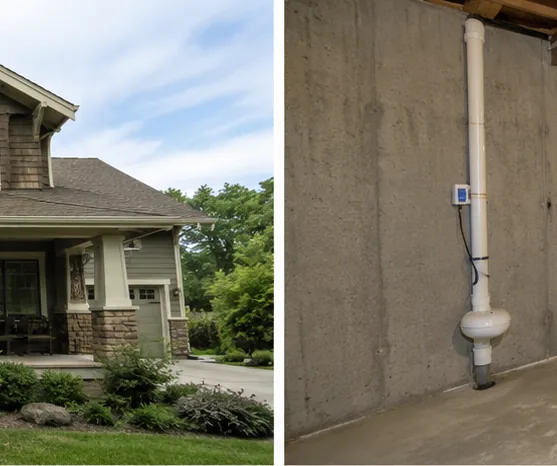
The rambler — what builders elsewhere call a rancher — is one of Burnsville's most common single-family forms, especially in the original 1965-1979 buildout along the Crystal Lake area and the older commercial corridors. The defining trait is that it puts everything on one level. That geometry changes where defects hide and where an inspector spends time. A 1,800-square-foot rambler carries its entire roof load over roughly twice the footprint of an 1,800-square-foot two-story, so the roof, the attic plane, and the foundation perimeter are all larger and proportionally more important. This is the opposite of a two-story, where the inspection weight shifts to interior framing and stair geometry.
It also means accessibility is generally better in some ways and worse in others. Mechanicals are reachable without stairs, but the long horizontal runs — supply plumbing, drain lines, ductwork, and electrical circuits — are longer and have more connection points along the way. We treat a rambler as a series of long horizontal systems rather than a compact stacked one, and that shapes the order and emphasis of the inspection.
The Roof Carries More Weight — Literally and on the Report
Because a rambler's roof footprint is large relative to its volume, roof condition drives a disproportionate share of rambler findings. More shingle area is aging in unison, there are more penetrations and flashing details, and many Burnsville ramblers have a low-slope section over an attached garage, a porch, or a 1980s addition. Those low-slope tie-ins are where ponding water, failed flashing, and ice-dam backup concentrate during a Minnesota winter. We walk the roof when it is safe and accessible and drone-fly the steeper or wet sections, documenting granule loss, nail pops, and the condition of every flashing and boot.
We also pay close attention to the long eave lines. A rambler has a lot of north-facing eave, and under-insulated single-level attics ice-dam readily here. Stained soffits, rotted fascia, and gutter pull-away along those runs are classic rambler findings in our reports.
The Attic: Bath-Fan Venting and Insulation Depth
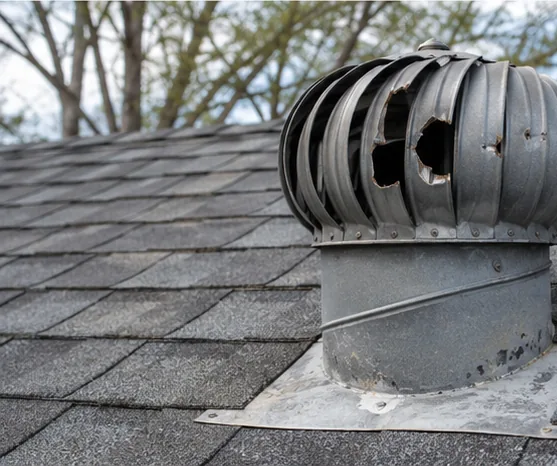
A rambler has a wide, shallow attic with no second-floor framing to break it up, which makes it one of the easier attics to assess thoroughly — and one of the most revealing. Two things dominate rambler attic findings. First, bath-fan venting: in 1960s-70s ramblers, bath fans were routinely dumped into the attic or stubbed into a soffit, and over decades that moisture feeds attic-sheathing mold. We confirm every bath and laundry fan terminates outside the building. Second, insulation depth and even coverage: single-level ramblers lose proportionally more heat through their large ceiling plane, so thin or compressed insulation shows up fast on the FLIR thermal imaging we run on every inspection.
Foundation: Basement, Slab, or Crawl Space
Most original Burnsville ramblers sit over full or partial basements, the regional default given the Twin Cities frost depth of 42 to 60 inches. A smaller share are slab-on-grade or built over crawl spaces, and the foundation type changes the inspection entirely. On a basement rambler, we walk the full foundation-wall perimeter and the center beam line, checking for the step-cracking, bowing, and water staining typical of glacial-till clay soil. On a slab rambler, attention shifts to slab cracking, embedded plumbing access, and especially perimeter grading, because a slab home has no basement to buffer a drainage problem. We confirm the foundation type on site and inspect accordingly. For deeper structural questions, our foundation inspection service goes further, and the cracked foundation wall findings page explains what different crack patterns mean.
Electrical: The Long Horizontal Circuit Problem
Ramblers from the 1965-1976 window are prime candidates for aluminum branch wiring. The long horizontal circuit runs in a single-level home mean a lot of connections — at every outlet, switch, and junction — and every aluminum connection is a place heat can build. We open the panel, look for Federal Pacific or Zinsco panels that are still distressingly common in 70s homes, and check connections for the discoloration and warmth that signal trouble. A full electrical inspection documents the panel, grounding, and circuit condition in detail.
Plumbing and the Long Sewer Lateral
A rambler's plumbing is spread horizontally, so drain runs are long and slope matters. Pre-1985 ramblers typically have original cast-iron drain stacks and a long clay or cast-iron sewer lateral running out under mature boulevard trees. That combination — long horizontal run plus old pipe plus tree roots — makes sewer scope close to mandatory on any older rambler. We push a camera from the cleanout to the city main, you watch the monitor, and you keep the video. Late-80s and early-90s ramblers may have polybutylene supply plumbing, which we flag wherever we find it.
HVAC on One Level
A single furnace and AC condenser typically serve the whole rambler, and the long horizontal ductwork can leave end-of-run rooms under-conditioned. We document furnace age and temperature rise, operate the AC when seasonally appropriate, and use thermal imaging to spot duct leakage and uneven distribution. Many original ramblers are on their second or third furnace; a dedicated HVAC inspection digs deeper when a system is near end of life.
What Rambler Buyers Most Often Miss
- Underestimating the roof. Buyers see a modest one-level house and forget the roof is large. Roof replacement is often the single biggest near-term cost on a rambler.
- Low-slope tie-ins. The flat-ish section over the garage or addition is where leaks start, and it's easy to miss from the ground.
- Attic bath-fan venting. A fan that runs but vents into the attic looks fine inside and quietly rots the sheathing above.
- Long sewer laterals. The longer the run under old trees, the more likely a belly or root intrusion.
- Radon. Burnsville sits in an elevated-radon area, and a basement rambler's large floor footprint is a large radon entry surface. We recommend radon testing on every rambler with a basement.
Local Burnsville Context
Burnsville incorporated in 1964 and its first big buildout wave, 1965 through 1979, produced a large share of the city's ramblers. Many cluster in the older Crystal Lake area and along the original County Road 42 corridor. Soil under much of central Burnsville is glacial till — high-clay, water-holding, and frost-active — which drives the foundation movement and grading issues we look for, while the Buck Hill area to the south sits on outwash sand that settles differently over decades. We build the rambler inspection around that local geology and that 1965-1979 defect profile.
Related Burnsville Inspection Pages
- Burnsville home inspection — what's included and the timeline
- Your Burnsville home inspector — credentials and local expertise
- Dakota County home inspection — the county-wide defect profile
- Burnsville split-level inspection — the city's signature 1970s housing type
- Burnsville townhome inspection — shared-wall and HOA scope
- Burnsville manufactured home inspection — HUD-tag homes and tie-downs
- Our full 120-point home inspection
- SPEC Home Services home