Deck Ledger Flashing Defects in Burnsville Homes
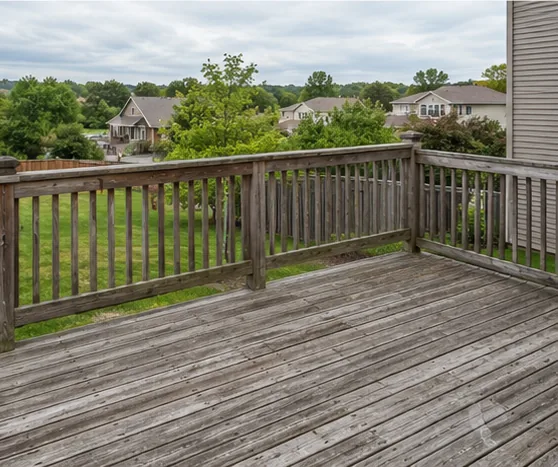
What the Deck Ledger Is
The ledger is the horizontal board that attaches a deck to the house. It carries the weight of the deck, everyone on it, and the snow load on top of it, transferring all of that into the home's rim joist. Two things make the ledger connection critical: it must be fastened correctly with through-bolts or structural lag screws (not nails), and it must be flashed so water can't get trapped behind it. When either fails, the consequences range from hidden rot to sudden collapse.
Why It Matters in Burnsville
Deck ledger problems show up across every Burnsville era for different reasons. On older 1965–1995 homes the original decks — or the DIY decks added over the decades — frequently lack flashing entirely and are nailed rather than bolted. On post-2010 Heart of the City infill and new construction, improperly flashed ledgers are one of the most common workmanship defects we catch, which is exactly why the 11-month builder-warranty inspection matters so much. Add Burnsville's heavy snow load and freeze-thaw cycling, and a marginal ledger connection is under real stress every winter.
Common Causes
The recurring problems are: no flashing over the ledger, so water runs behind it and rots the rim joist; nails instead of bolts; ledger lagged into nothing but the siding or sheathing rather than the framing; missing or under-sized fasteners; and ledgers bolted over old siding that holds the board off the structure. Each of these is a code-recognized deficiency.
Risks If Left Unaddressed
Deck ledger failures are the leading cause of catastrophic deck collapses, and collapses overwhelmingly happen when the deck is fully loaded with people. Short of collapse, a missing-flashing ledger silently rots the rim joist — structural framing inside the wall — for years. This is one of the few exterior findings we treat as a genuine life-safety item.
What We Look For
SPEC inspects the ledger for proper flashing, correct fasteners (through-bolts or structural screws, properly spaced), solid attachment to framing, and any rot or movement at the connection and the rim joist. We check post-to-beam and post-to-footing connections, joist hangers, guardrail strength, and stair attachment as part of the same evaluation. We also confirm Burnsville deck-permit history where possible — the city actively enforces deck permits, and an unpermitted deck is a routine closing-table issue.
Solutions & Repair Costs
Retrofitting proper flashing and adding code-compliant ledger bolts to an existing deck is often a few hundred to low-four-figure repair. If the rim joist has already rotted, the cost climbs because framing must be opened and replaced. A full deck rebuild on a larger structure runs into the mid five figures. We document the deficiency and recommend a licensed contractor for the repair quote.