The Ultimate Burnsville Radon Guide (2026)
The 100-word answer: Radon is a colorless, odorless radioactive gas and the second-leading cause of lung cancer. Burnsville sits in Dakota County, an EPA Zone 1 (highest-potential) radon area, where basement tests routinely meet or exceed the 4.0 pCi/L action level. The gas seeps from uranium-bearing soil through slab cracks, the slab-wall joint, sump pits, and floor penetrations — and a finished basement does nothing to stop it. The fix is a sub-slab depressurization system, typically reducing levels below the action level within 24 hours. Test with a 48-hour continuous monitor during your inspection. Get a free quote in under 60 seconds. Call 218-600-2938.
What's in this guide
- What radon is and why it matters
- Why Burnsville is a Zone 1 radon area
- The 4.0 pCi/L action level
- How radon enters a Burnsville home
- How we test: the 48-hour monitor
- Mitigation: sub-slab depressurization
- Radon in a real-estate transaction
- Radon myths, debunked
- The health math: why 4.0 matters
- Radon in new construction
- Test types: what to trust
- When to retest
- FAQ
What Radon Is and Why It Matters
Radon is a naturally occurring radioactive gas produced by the decay of uranium in soil and rock. It is invisible, odorless, and tasteless, which is exactly why it is dangerous — you cannot detect it without an instrument. According to the EPA, radon is the second-leading cause of lung cancer overall and the leading cause among non-smokers. The Minnesota Department of Health estimates more than two in five Minnesota homes have radon levels that pose a health risk. None of this is hypothetical in Burnsville; it is the baseline condition of the local geology.
Why Burnsville Is a Zone 1 Radon Area
The EPA divides counties into three radon zones. Dakota County — which includes Burnsville, Apple Valley, Eagan, Lakeville, and Rosemount — is classified as Zone 1, the highest-potential category, with a predicted average indoor screening level above 4.0 pCi/L. The geological basis is uranium-bearing soil in the surface and subsurface strata, and along the Minnesota River bluff that defines Burnsville's north and west edges, proximity to limestone bedrock adds additional radon load. This is why radon testing is not an exotic add-on in Burnsville — it is the expected default. The county-wide picture is summarized on our Dakota County inspection page, and the defect-library entry on elevated radon covers the finding in detail.
The 4.0 pCi/L Action Level
Radon is measured in picocuries per liter (pCi/L). The EPA action level is 4.0 pCi/L: at or above that, mitigation is recommended. But it is important to understand the science — there is no threshold below which radon is truly safe. The EPA, the Minnesota Department of Health, and the WHO all note that risk decreases continuously as levels fall, and the WHO recommends a reference level of 2.7 pCi/L. Many Burnsville homeowners choose to mitigate at readings between 2 and 4 during a transaction, particularly when a finished lower level is used as a bedroom.
| Result (pCi/L) | What it means | Typical Burnsville action |
|---|---|---|
| Below 2.0 | Low; well under action level | Retest every few years; no mitigation needed |
| 2.0–3.9 | Below action level but not zero-risk | Consider mitigation, especially with finished basement bedrooms |
| 4.0–7.9 | At or above EPA action level | Mitigation recommended |
| 8.0+ | Substantially elevated | Mitigate promptly; common in older Burnsville basements |
How Radon Enters a Burnsville Home
Radon follows the path of least resistance from the soil into the lower level, driven by the stack effect — warm air rising in the home creates a slight negative pressure that pulls soil gas in. The common entry points in Burnsville's housing stock are:
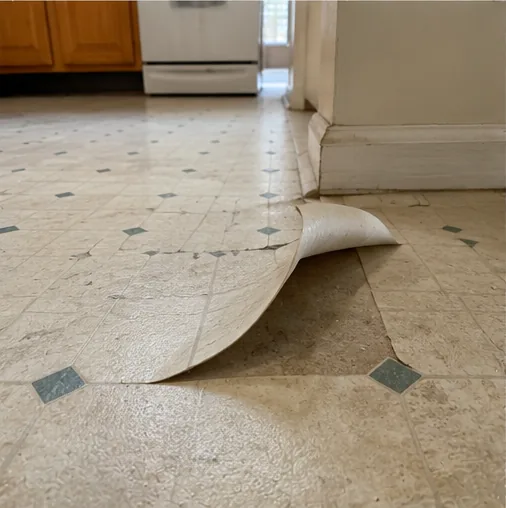
- Cracks in the basement slab and foundation walls — common in clay-till and bluff-edge homes
- The slab-to-wall cove joint where the floor meets the foundation
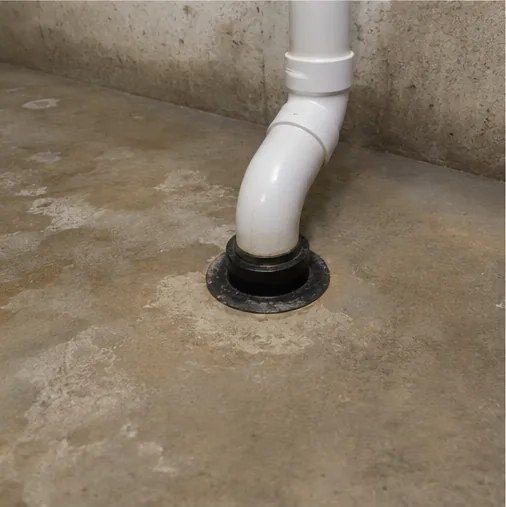
- Open or unsealed sump pits — a direct conduit to the soil gas
- Floor drains, plumbing penetrations, and utility chases
- Exposed soil in crawl spaces
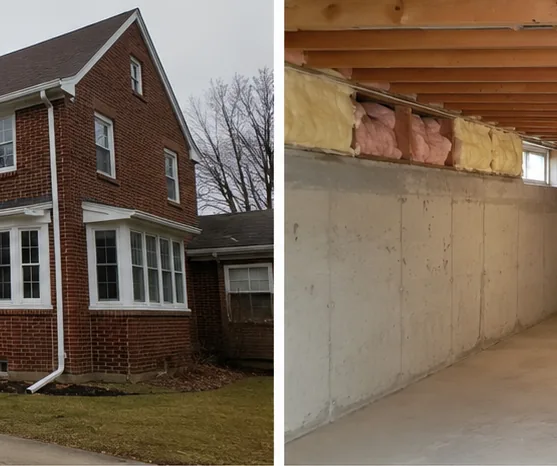
Older 1965–79 split-levels with original slabs and 1980s homes with shrinkage cracking tend to read higher. A foundation inspection often reveals the same cracks that double as radon pathways.
How We Test: the 48-Hour Monitor
SPEC uses a continuous radon monitor placed in the lowest livable level for a minimum 48-hour test under closed-house conditions (windows and exterior doors kept shut except for normal entry/exit). Unlike a passive charcoal kit, a continuous monitor records hourly readings and carries a court-defensible chain of custody — which matters when the result becomes a negotiation point in a real-estate deal. Results are delivered with your inspection report. The service details live on the radon testing page, and the radon test cost factors page explains what drives pricing without us quoting our own number.
Mitigation: Sub-Slab Depressurization
The standard, proven fix is active sub-slab depressurization (ASD). A suction point is created beneath the slab, a sealed PVC pipe is routed up and out above the roofline, and a continuous inline fan draws soil gas out before it can enter the home. A properly installed system typically drops radon to well below the action level within 24 hours, runs nearly silently, and uses very little electricity. Cost for a standard Burnsville system generally lands in the low four figures, varying with foundation type, slab condition, and routing. A post-mitigation test confirms success. (SPEC tests radon; mitigation is performed by licensed mitigation contractors — we do not quote our own inspection price here.)
Radon in a Real-Estate Transaction
For buyers: test during your inspection contingency. A 48-hour result tells you whether mitigation is needed and lets you negotiate the cost — a four-figure mitigation system is a legitimate concession to request from the seller. The buyer's full timeline is in the ultimate home buying guide.
For sellers: test before listing. Knowing your number lets you mitigate proactively, which removes a predictable objection and signals a well-cared-for home. A pre-installed, documented mitigation system is a selling point, not a red flag — see the ultimate home selling guide. Radon is one of three add-ons (with the sewer scope) that most often pays for itself, and the base inspection it rides along with is covered in the ultimate home inspection guide.
Radon Myths, Debunked
- "My neighbor tested low, so I'm fine." Radon varies house-by-house with slab condition, foundation type, and soil. Test your home.
- "It's a new home, so no radon." New Burnsville builds in Heart of the City sit on the same Zone 1 soil. Many are built radon-resistant but still need verification.
- "A finished basement is sealed." Drywall and carpet do nothing to stop soil gas entering through the slab and cove joint.
- "Opening windows fixes it." Temporary at best, and it defeats closed-house test conditions. ASD is the real solution.
The Health Math: Why 4.0 Matters
It helps to translate pCi/L into risk. The EPA estimates that radon causes more than 20,000 lung-cancer deaths per year in the United States, making it the second-leading cause overall and the leading cause among people who have never smoked. The risk is cumulative and dose-dependent — it rises with both the concentration and the years of exposure — which is why a finished basement bedroom used nightly matters more than an unfinished storage cellar. For a smoker, radon exposure multiplies an already high baseline risk; for a non-smoker, it is the dominant environmental lung-cancer risk in the home. None of this is meant to alarm — radon is one of the most fixable hazards a home can have. The point is simply that the 4.0 pCi/L line is a public-health action threshold, not a magic safe-versus-unsafe boundary, and in a Zone 1 county like Dakota, testing is the only way to know which side of it your home falls on.
Radon in New Burnsville Construction
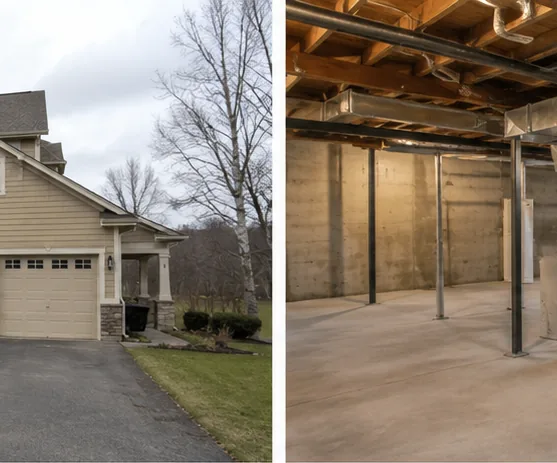
Buyers sometimes assume a new Heart of the City build is radon-free. It is not — it sits on the same Zone 1 soil as the 1972 split-level down the road. What has changed is the building code: Minnesota requires radon-resistant new construction (RRNC) features in new homes, including a passive sub-slab pipe stubbed up through the roof, a sealed sump, and a gas-permeable layer under the slab. These passive systems reduce radon but do not guarantee a result below 4.0, and a passive stack can be activated with an inline fan if testing shows it is needed. The lesson: test new construction too. A passive system plus a confirming test is the gold standard, and verifying it is part of a new construction inspection or the 11-month warranty inspection.
Test Types: What to Trust in a Real-Estate Deal
Not all radon tests carry equal weight, and the difference matters when money is on the line. The hardware-store charcoal kit you mail to a lab gives a single averaged number with no record of whether windows were left open during the test — fine for a casual homeowner check, but easy for a counterparty to dispute. A continuous radon monitor, the instrument SPEC uses, logs an hourly reading across the full 48-plus-hour test, which does three things a charcoal kit cannot: it confirms closed-house conditions were maintained, it reveals tampering or open-window spikes, and it produces a defensible chain of custody. In a Burnsville purchase where an elevated result becomes a four-figure mitigation negotiation, that defensibility is exactly what keeps the number from being argued away. For a long-term picture of your own home, a separate long-term alpha-track test over 90-plus days captures seasonal variation — useful for a homeowner, but the 48-hour continuous monitor is the real-estate standard.
When to Retest
Radon is not static — it shifts with the seasons, the soil moisture, foundation changes, and even barometric pressure. A single test is a strong indicator, but the Minnesota Department of Health recommends retesting under several circumstances:
- Every two to five years even after a low result, since levels can drift upward.
- After any major foundation work, basement finishing, or new slab cracking.
- After installing or servicing a mitigation system, to confirm it is still performing.
- Before listing or buying, to get a current real-estate-grade number with chain of custody.
Because Burnsville is Zone 1, periodic retesting is cheap insurance against a slow creep above the action level in a basement people actually live in. It pairs naturally with the seasonal checkups in the ultimate home maintenance guide.
Related Burnsville Resources
- Radon testing service · Radon cost factors
- Elevated radon finding
- Ultimate sewer scope guide — the other essential add-on
- Ultimate home inspection guide
- Burnsville home inspection · Dakota County inspection
- Apple Valley · Eagan · Rosemount — all Zone 1
- FAQ · Contact