The Ultimate Burnsville Sewer Scope Guide (2026)
The 100-word answer: A sewer scope is a camera inspection of the buried lateral line running from your home to the city main — the one major system a standard inspection can't see. In Burnsville, it is essential on any pre-1985 home: those laterals are clay or cast iron, now 40 to 60 years old, threaded through soil packed with mature silver-maple and oak roots. The common failures are root intrusion, bellies, offset joints, and collapsed sections — any of which can become a five-figure repair. SPEC pushes a calibrated camera from cleanout to main, you watch live, and you keep the video. Get a free quote in under 60 seconds. Call 218-600-2938.
What's in this guide
- What a sewer scope is
- Why Burnsville laterals fail
- What the camera finds
- Pipe materials by era
- How the scope is done
- Repair options if it fails
- When you need one
- Warning signs of a problem
- Reading the scope footage
- Keeping a lateral healthy
- Scope, radon, or both?
- FAQ
What a Sewer Scope Is
Your home's drains all converge into a single underground pipe — the sewer lateral — that carries everything to the city's sewer main under the street. A standard home inspection evaluates the visible plumbing inside the house but cannot see this buried line. A sewer scope closes that blind spot: a waterproof, self-leveling camera on a flexible push-rod travels the full length of the lateral while recording video, so the pipe's interior condition becomes visible end to end. It is the only way to know whether the most expensive-to-repair plumbing component in the home is sound. The service is detailed on the sewer scope inspection page, and it complements the interior plumbing inspection.
Why Burnsville Laterals Fail
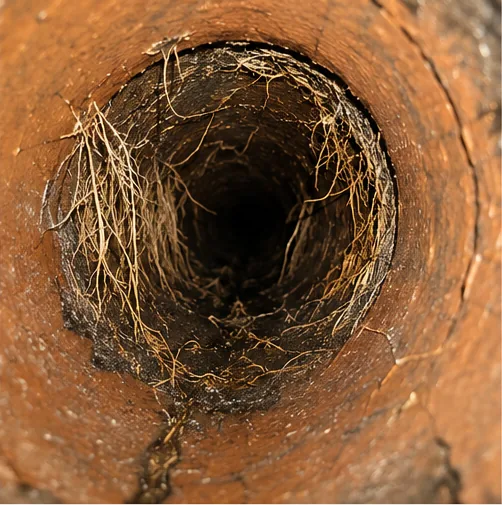
Three Burnsville-specific factors gang up on sewer laterals. First, age: the city's dominant 1965–79 buildout means most older homes have laterals that are 40 to 60 years old — past the comfortable service life of the clay and cast iron used in that era. Second, trees: Burnsville's mature neighborhoods are full of silver maples and oaks whose roots seek the moisture and nutrients leaking from old pipe joints, then grow inside and choke the line. Third, soil: the outwash sands around Buck Hill and south Burnsville settle differentially over decades, sagging the pipe into bellies, while clay-till heave elsewhere shifts and offsets joints. The result is a predictable failure cluster that a standard visual walkthrough never reveals.
What the Camera Finds
| Finding | What it looks like | Why it matters |
|---|---|---|
| Root intrusion | Fine roots or root masses at joints | Causes recurring backups; worsens until the joint fails |
| Belly | Standing water mid-run that doesn't drain | Sediment collects, leading to repeated blockages |
| Offset joint | Misaligned step between pipe sections | Catches solids; entry point for roots and soil |
| Cracked / collapsed pipe | Visible breaks, missing pipe wall, soil intrusion | Structural failure; often needs replacement |
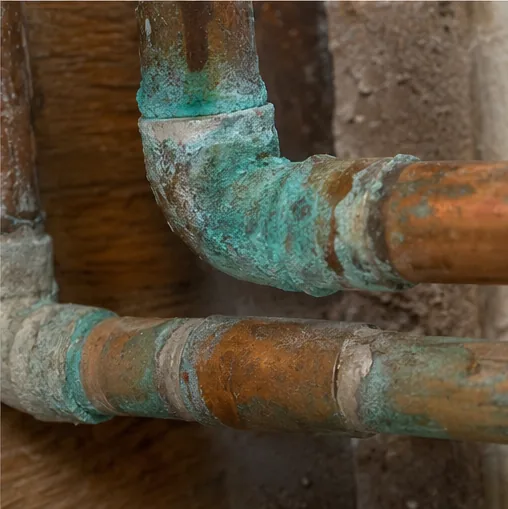
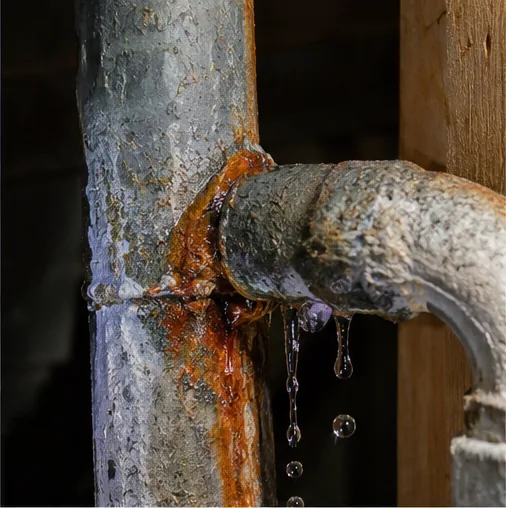
| Scale / corrosion | Rough, narrowed interior in cast iron | Reduces capacity; precursor to failure |
| Improper repair / connection | Mismatched materials, illegal taps | Code and reliability concerns |
Each of these is captured on the recorded video, which you keep with your report — so if you negotiate a repair, you have the documentation to back it up.
Pipe Materials by Era
- Pre-1960: Vitrified clay tile in short sections with mortar joints — extremely vulnerable to root intrusion and joint failure. Rare in Burnsville but present in the oldest pockets.
- 1965–1979: Clay and cast iron dominate Burnsville's first wave. Cast iron corrodes from the inside; clay joints leak and invite roots. This is the highest-priority scope era.
- 1980–1985: Transition period; a mix of cast iron and early plastic.
- Post-1985: PVC becomes standard — far more durable, with glued joints that resist roots. Still worth scoping for settlement, offset joints, and construction debris, but the failure rate is much lower.
This mirrors the era logic for the rest of the home — see the era defect map in the ultimate home inspection guide.
How the Scope Is Done
- Locate access. We find an accessible cleanout — exterior, basement, or via a pulled toilet if needed.
- Push the camera. A self-leveling color camera travels from access point to the city main, transmitting live video.
- You watch live. You see the line's condition in real time on the monitor and we narrate what each finding means.
- Document. The full video is saved and delivered with your inspection report, with notable findings time-stamped.
The scope is typically scheduled as an add-on to the main inspection so everything lands in one visit and inside your contingency window. Cost factors (without us quoting our own price) are explained on the sewer scope cost factors page.
Repair Options if It Fails
A failed scope is not automatically a disaster — the options scale with the problem:
- Hydro-jetting / rooter: clears root intrusion and scale; buys time but doesn't fix structural defects.
- Spot repair: dig and replace a single failed section — the cheapest structural fix.
- Trenchless lining (CIPP): a resin liner cured in place, restoring the pipe without a full dig where the host pipe is sound enough.
- Pipe bursting / full replacement: for collapsed or severely bellied laterals; on a deep Burnsville run this can reach five figures.
Because SPEC tests and documents but does not perform sewer repair, you get an unbiased assessment to take to a licensed plumber — and a video file that supports a repair-credit negotiation. Buyers should fold this into the strategy in the ultimate home buying guide; sellers can preempt it via the ultimate home selling guide.
When You Need One
- Always on a pre-1985 Burnsville home before closing.
- Strongly recommended on any home with mature trees near the lateral path, regardless of age.
- Worth it on post-1985 homes if there is any history of backups, slow drains, or a finished basement at risk.
- Before listing if you are selling an older home and want to avoid a surprise during the buyer's contingency.
Warning Signs You Already Have a Problem
A scope is best done proactively, but certain symptoms mean you should not wait. If a Burnsville home shows any of these, the lateral is telling you something:
- Multiple slow drains at once — when several fixtures back up together, the problem is downstream in the lateral, not at a single trap.
- Gurgling toilets — air displaced by a partial blockage forces bubbles back up.
- Sewage odor in the yard or basement — a cracked or separated lateral leaking into soil.
- Recurring backups every few months — the classic signature of root intrusion regrowing after each rooter visit.
- Unusually green, fast-growing grass over the lateral path — a leaking line fertilizing the lawn.
- Sinkholes or soft spots above the line — soil washing into a collapsed section.
Any one of these warrants a scope before you buy or before the next backup floods a finished basement. Recurring basement water from a failing lateral can be mistaken for a foundation problem — the wet basement causes entry sorts out which is which.
Reading the Scope: How to Interpret What You See
Watching the monitor during a scope is more useful when you know what the camera is showing you. The image is a fisheye view down the pipe, and a few cues tell the story. Clear, dry pipe wall with a thin water stream at the bottom is what a healthy lateral looks like. Standing water that the camera wades through mid-run, especially if it rises toward the lens, signals a belly. Fine white or tan tendrils at a joint are early root intrusion; a dense mass that blocks the view is advanced. A visible step or ledge where one pipe section sits higher than the next is an offset joint. Flaking, rust-colored buildup narrowing the channel is cast-iron scale. And a sudden break in the pipe wall with visible soil is a crack or collapse. Because SPEC narrates these in real time and the footage is yours to keep, you are not taking anyone's word for it — you and a plumber can both review the same evidence. That documentation is what converts a finding into a credible repair-credit request inside the contingency window described in the home buying guide.
Keeping a Lateral Healthy
Once you own the home, a few habits extend the life of even an older lateral. Avoid flushing wipes, grease, and fibrous food waste, all of which snag on rough cast-iron walls and root intrusions. If you have mature trees near the line, consider periodic preventive jetting or root-foaming on a schedule rather than waiting for a backup. Know where your cleanout is before an emergency. And if your scope revealed a minor belly or early root intrusion that didn't justify immediate repair, put a recurring camera check on your calendar so you can act before a slow problem becomes a collapse. These line-care habits dovetail with the seasonal drainage and tree-management tasks in the ultimate home maintenance guide.
Scope, Radon, or Both? Prioritizing Add-Ons
If budget forces a choice between add-ons, let the home's age decide. On a pre-1985 home, the sewer scope is the higher-stakes test because a failed lateral is one of the largest single repairs a home can hand you. On any Burnsville home, radon should be tested because the county is EPA Zone 1 and the test is quick and inexpensive. In practice most buyers do both, scheduled alongside the main inspection so everything lands inside the contingency window — the same window-management logic laid out in the ultimate home buying guide. The radon side of the decision is covered in full in the ultimate radon guide.