The Ultimate Burnsville Home Inspection Guide (2026)
The 100-word answer: A Burnsville home inspection is a non-invasive, 120-point visual evaluation of every accessible system in a house — roof, structure, electrical, plumbing, heating, cooling, and the interior. In Burnsville, the inspection only earns its keep when it is tuned to the local housing stock: aluminum branch wiring in 1965–76 homes, Federal Pacific and Zinsco panels still energized in 70s splits, polybutylene plumbing in late-80s subdivisions, bath fans dumping into attics, and bluff-edge or clay-till foundation movement. SPEC delivers a photo-documented report in 24 hours, with FLIR thermal imaging available and sewer scope and radon as add-ons. Call 218-600-2938.
What's in this guide
- What a home inspection is (and isn't)
- Why Burnsville inspections are different
- The 120 points: every system we check
- Era-by-era defect map for Burnsville
- The inspection day, step by step
- How to read your inspection report
- Add-ons: radon, sewer scope, thermal, mold
- The Minnesota contingency timeline
- What an inspection does not cover
- Choosing the right inspector
- How long your report stays useful
- FAQ
What a Home Inspection Is — and Isn't
A home inspection is a snapshot of a home's condition on the day it is inspected, performed by a generalist who is fluent in every major system. It is visual and non-invasive: we do not open walls, dismantle equipment, or perform code-compliance certification. We report what is observable, accessible, and operable, and we flag what cannot be evaluated. The goal is decision-grade information, not a punch list of perfection.
It is worth being precise about what it isn't. It isn't an appraisal — that's a lender's valuation. It isn't a code inspection — that's the city's job at permit time. It isn't a warranty or a guarantee that nothing will fail next winter. And it isn't a pass/fail grade. A good Burnsville inspection report sorts findings into safety hazards, major defects, minor defects, and maintenance items, so you can see the difference between a quick GFCI swap and a Federal Pacific panel that genuinely needs replacing. For the service-level overview, see our home inspection service page and the deeper Burnsville home inspection walkthrough.
Why Burnsville Inspections Are Different
Burnsville incorporated in 1964 and then grew in distinct waves, which means a single zip code can hold a 1972 split-level, a 1989 colonial, and a 2018 Heart of the City townhome — three completely different defect profiles within a few blocks. A generic checklist treats them all the same. A Burnsville-tuned inspection treats them as three separate risk problems.
Geography compounds it. The Minnesota River bluff defines the north and west edges of the city — the River Hills neighborhood sits on bluff-edge soils where step-cracking and slow foundation movement are real concerns. The central belt through the Crystal Lake area, Sunset Pond, and Crosstown Estates sits on glacial-till clay that holds water and heaves with frost. South toward Buck Hill, outwash sands cause differential settlement over decades. And nearly all of Burnsville falls within an EPA elevated-radon zone, so radon is not an exotic add-on here — it's expected. The county-wide picture is laid out in our Dakota County home inspection overview.
The 120 Points: Every System We Check
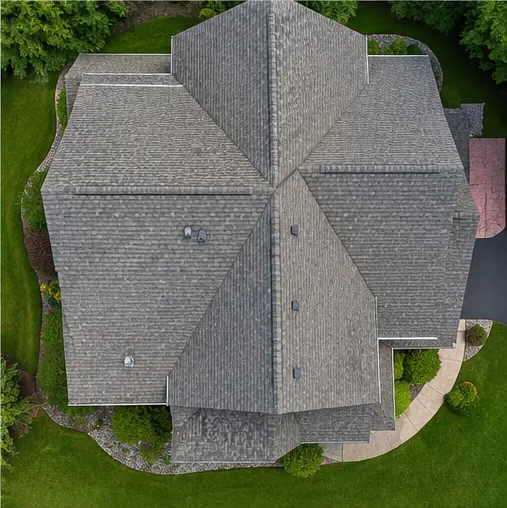
A SPEC inspection is organized as a 120-point evaluation across nine major categories. The table below is the high-level map; each category contains dozens of individual checks.
| System | What we evaluate | Burnsville-specific focus |
|---|---|---|
| Roof | Shingles, flashing, valleys, penetrations, gutters | Ice-dam history on north eaves, granule loss on south slopes |
| Exterior | Siding, trim, grading, walkways, decks | Soffit/fascia rot, LP/Masonite siding failure, grading toward foundation |
| Structure | Foundation, framing, posts, beams | Bluff step-cracking, clay-till wall cracks, sand settlement |
| Attic & insulation | Ventilation, insulation depth, moisture | Attic mold from bath fans venting into the attic |
| Electrical | Panel, breakers, wiring, grounding, outlets | Aluminum branch wiring, Federal Pacific/Zinsco panels, double-taps |
| Plumbing | Supply, drains, water heater, fixtures | Polybutylene, galvanized lines, aging water heaters |
| Heating | Furnace, distribution, venting, age | Furnaces past lifespan, cracked heat exchangers on 90s units |
| Cooling | Condenser, coil, temperature split | Original first-wave AC, undersized for additions |
| Interior | Walls, ceilings, floors, windows, stairs, GFCI/AFCI | Basement moisture signs, window egress in bedrooms |
You can browse all of these failure modes in our findings library — twenty of the defects we document most often in Burnsville, each with photos and repair guidance. For the homeowner-facing version, the Burnsville inspection checklist walks the same systems in plain language.
Era-by-Era Defect Map for Burnsville
The fastest way to predict what an inspection will find is to know when the house was built. Burnsville's three buildout waves each carry a signature.
1965–1979: The split-level era
This is Burnsville's dominant first wave — the post-incorporation explosion. Expect aluminum branch wiring (a 1965–76 fire-risk window), Federal Pacific Stab-Lok and Zinsco panels that frequently fail to trip, original cast-iron drain stacks now corroding from the inside, bath fans terminating in the attic or soffit, and first-generation central air at or past lifespan. Roofs in this era are often on their third or fourth shingle layer.
1980–1995: The colonial era
Sunset Pond, Crosstown Estates, and the County Rd 42 corridor filled in here. The signature defect is polybutylene plumbing — gray, flexible supply line prone to brittle-failure at fittings — plus LP/Masonite hardboard siding that swells and rots at the bottom course, and first-generation high-efficiency furnaces now reaching end-of-life. Decks from this era frequently lack permits and proper ledger flashing.
Post-2010: Heart of the City infill
New construction is not defect-free. The recurring findings are unflashed or under-flashed deck ledgers, HVAC units commissioned without proper charge or airflow, garage slabs cracking on poorly compacted fill, negative grading that was never corrected after landscaping, and the occasional missing kitchen or bath GFCI. This is exactly why the new construction inspection and 11-month warranty inspection exist.
The Inspection Day, Step by Step
Most inspections take 3 to 4 hours on-site for a typical Burnsville home, longer with add-ons. Here is the sequence:
- Roof & chimney — walked when safe and accessible, drone-flown on steep or fragile pitches. We document flashing, penetrations, shingle condition, and chimney integrity.
- Exterior envelope — siding, trim, grading, drainage, decks, and the roof drainage path.
- Attic & insulation — ventilation, insulation depth, and any moisture or mold staining on the sheathing.
- Mechanical systems — the electrical panel is opened and photographed, the water heater and plumbing are run, the furnace temperature rise is documented, and AC is operated when seasonally appropriate.
- Basement & foundation — we look for moisture intrusion, efflorescence, cracking, and the condition of support posts and the sump system.
- Add-ons — radon monitor placement, sewer scope, thermal sweep.
- Walk-through — the last 30 to 45 minutes, on-site, showing you the major findings in person.
How to Read Your Inspection Report
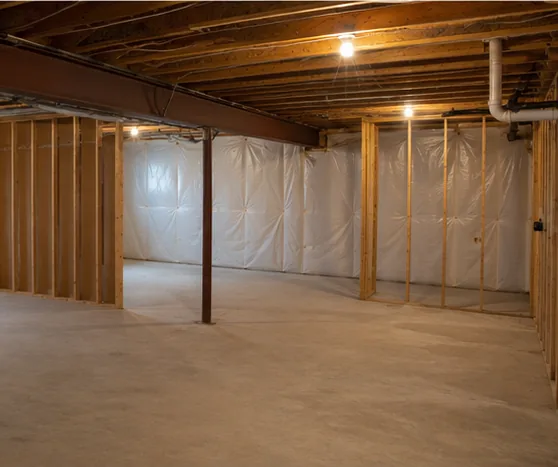
SPEC delivers a 40–80 page annotated PDF in 24 hours — usually within a few hours of finishing on-site. The report is photo-driven, color-coded by priority, and front-loaded with a one-page executive summary your agent can hand to the listing side.
Read it in this order: (1) the summary, to triage the big items; (2) safety hazards, which take precedence over everything; (3) major defects, which drive negotiation; (4) minor and maintenance items, which are your first-year to-do list. Resist the urge to treat the page count as a verdict — a thorough report on a sound house can run long simply because we document everything. What matters is the severity tier, not the volume. If anything is unclear, call us; the report comes with a debrief. You can preview the format on our sample report page.
Add-Ons: Radon, Sewer Scope, Thermal, Mold
The base inspection covers condition. Add-ons cover the things you cannot see from a walkthrough.
- Radon testing — a 48-hour continuous monitor with court-defensible chain of custody. Nearly mandatory in Burnsville's elevated-radon zone. See the ultimate radon guide and radon testing service.
- Sewer scope — a camera pushed from cleanout to the city main, essential on any pre-1985 clay or cast-iron lateral. See the ultimate sewer scope guide and sewer scope service.
- FLIR thermal imaging — available on every inspection to find hidden moisture, missing insulation, and overheating circuits. See thermal imaging.
- Mold inspection — visual plus air sampling where attic or basement moisture is suspected. See mold inspection.
The Minnesota Contingency Timeline
Most Minnesota purchase agreements give buyers a 5-to-10-day inspection contingency window. The practical play: call the day your offer is accepted, get inspected within 24–48 hours, receive the report that evening, and have your negotiation conversation inside the first five days. Burnsville buyers routinely use SPEC reports to negotiate five-figure concessions on items like a failed furnace, a Federal Pacific panel, or a bellied sewer line. For the buyer's full playbook, read the ultimate home buying guide; sellers should read the ultimate home selling guide on pre-listing strategy.
What a Standard Inspection Does Not Cover
Honesty about scope is part of a good inspection. A standard 120-point evaluation is visual and non-invasive, which means several things fall outside it by design — not because they don't matter, but because they require specialized equipment, destructive access, or a separate license. Knowing these boundaries up front lets you order the right add-ons and avoid false confidence.
| Not in the standard scope | Why | How to address it |
|---|---|---|
| The buried sewer lateral | Underground, not visible | Add a sewer scope — essential pre-1985 |
| Radon gas levels | Requires a 48-hour monitor | Add radon testing — Burnsville is Zone 1 |
| Inside walls and chases | Non-destructive standard | Thermal imaging flags hidden moisture/heat |
| Mold species / air quality | Needs lab sampling | Add a mold inspection with air sampling |
| Septic & private well | Specialized testing | Septic and well water testing on rural-edge homes |
| Code certification | That is the city's role | Pull permit history from the city portal |
The practical takeaway for Burnsville: on a pre-1985 home, the base inspection plus radon plus a sewer scope is the standard package — the two add-ons cover the two most expensive invisible systems, and skipping them is where buyers get surprised after closing.
Choosing the Right Inspector in Burnsville
Not every inspector is equally suited to Burnsville's housing. A generalist running a national checklist will check the same boxes, but the value is in the local pattern recognition — knowing that a 1972 split-level on the Crystal Lake side is likely to have aluminum branch wiring and a Federal Pacific panel before even opening the cover, or that a Buck Hill home on outwash sand deserves a closer look at slab and lateral settlement. When you evaluate an inspector, look for: a genuine credential (SPEC carries the InterNACHI Master Inspector designation), a photo-driven report rather than a checklist with a few snapshots, a willingness to let you attend and ask questions, and turnaround that fits your contingency window. SPEC's Reports in 24 Hours standard exists precisely because a report that arrives on day six of a five-day contingency is useless. You can read more about the person doing the work on the Burnsville home inspector page and review credentials on certifications.
How Long Your Report Stays Useful
An inspection is a snapshot in time, but a good report keeps paying off long after closing. The maintenance items it flags become your first-year to-do list; the system-age notes feed your replacement budget; and the documented baseline is something you can hand your eventual buyer's agent when you sell. Treat the report as a living document: as you complete repairs, keep the invoices and permits with it. When you eventually list, that paper trail shortens the next inspector's findings and supports your disclosure — which is the through-line connecting this guide to the ultimate home selling guide and the ultimate home maintenance guide.
Related Burnsville Resources
- Your Burnsville home inspector — credentials and approach
- What affects inspection cost — and a free instant quote
- Cost factors explained
- Home inspection near me — fast local scheduling
- Ultimate home maintenance guide — keep your findings list short
- Apple Valley, Eagan & Lakeville — nearby cities we serve
- General FAQ · Service area